
Thorny bamboo
Bambusa bambos
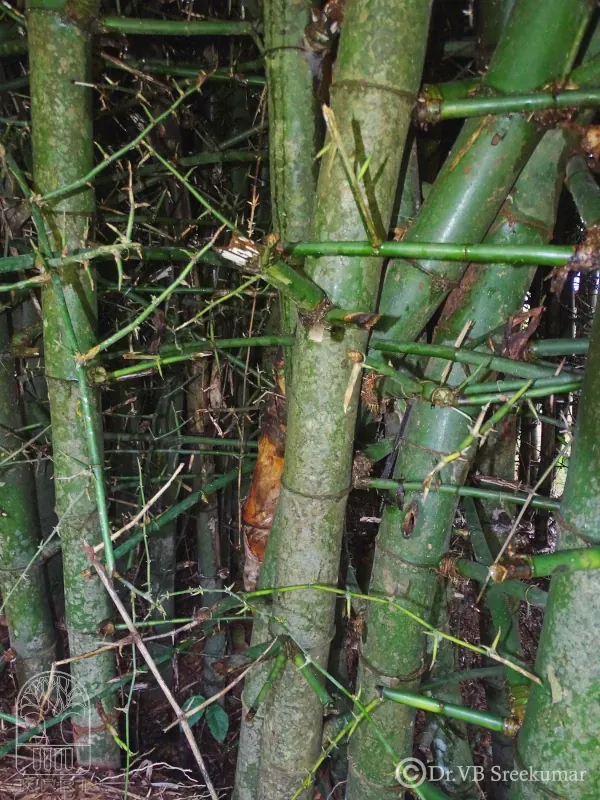
Description
Growing requirements
Thorny bamboo (Bambusa bambos) is a giant perennial plant belonging to the Bambusoideae subfamily of the Poaceae family. This species is characterized by a robust root system and stems that can reach heights of up to 30 meters under natural conditions.
Native to tropical regions of South and Southeast Asia, including India and Sri Lanka, this crop thrives in tropical climates. It requires high rainfall and average annual temperatures consistently above 20 degrees Celsius for optimal development.
Successful cultivation requires fertile, well-drained loamy soils with a neutral to slightly acidic pH level. The plant is highly sensitive to waterlogging, although it prefers high atmospheric humidity throughout the year.
Agronomic management involves regular application of nitrogen fertilizers during the active growing season to maximize biomass production. Effective management of planting density is crucial, as the plant tends to spread aggressively via its rhizomes.
The crop holds significant economic value: its strong stems are used extensively in construction, furniture manufacturing, papermaking, and flooring. Additionally, leaves and young shoots are utilized in traditional medicine and culinary arts after appropriate processing.
Main diseases and pests
Fungal diseases are the most significant threat, including rust and various leaf spot pathogens that occur when plantation aeration is insufficient. Root rots may also develop in stagnant water conditions.
Primary pests include bamboo mites and larvae of certain moth species that damage tender foliage. Furthermore, stem borers can cause substantial structural damage, significantly reducing the quality and value of the harvested timber.