
Odashima Bamboo
Bambusa odashimae
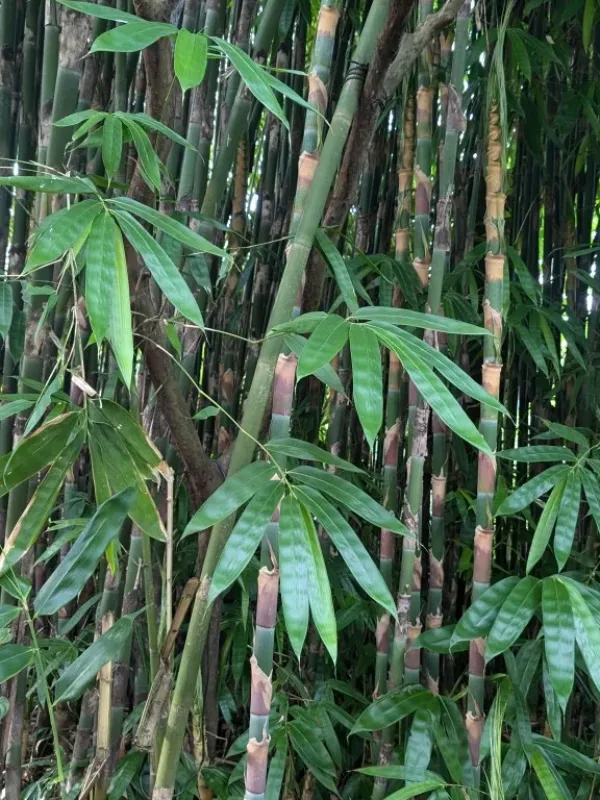
Description
Growing requirements
Bambusa odashimae is a species of evergreen perennial plant belonging to the Poaceae family, specifically the bamboo subfamily. It is known for its sturdy culms and rapid growth habits, making it a significant species in both tropical and subtropical horticultural settings.
Native to Taiwan, this bamboo species thrives in environments characterized by high humidity and consistent warmth. It is naturally found in regions where the climate supports lush forest growth, providing the necessary conditions for its extensive rhizome system to flourish.
The cultivation requirements for Bambusa odashimae involve deep, well-draining soils rich in organic matter. A neutral or slightly acidic soil pH is preferred, as this optimizes nutrient uptake and encourages the development of strong, thick-walled culms.
Climatic adaptability is limited to frost-free zones. This plant demands a temperature range typically between 20°C and 30°C. In areas where temperatures drop below these thresholds, greenhouse protection or controlled environmental settings are necessary to maintain plant health.
Agronomic management focuses on consistent irrigation during the growing season. Mulching is highly recommended to regulate soil temperature and moisture levels, which supports the shallow root system common to many bamboo species.
Main diseases and pests
Common threats to Bambusa odashimae include fungal diseases such as leaf rust and root rot, which are often triggered by improper irrigation or poor drainage. Improving airflow within the bamboo stand is the best preventative strategy against these pathogens.
Pests such as bamboo mites and aphids pose risks to the plant's vigor. They primarily affect the leaves and tender shoots, which can stunt the overall growth of the culm if infestations are not identified and treated early in the season.
To manage these threats, integrated pest management (IPM) practices are encouraged. This includes the introduction of natural predators that keep pest populations below economic injury levels, reducing the need for chemical interventions.
Environmental stress, particularly sudden drought, can make the plants more susceptible to secondary infections. Maintaining a balanced soil moisture level is essential for the plant to deploy its natural defense mechanisms against common environmental pathogens.
Regular monitoring of the plantation is vital for long-term health. Timely removal of dead or heavily infested culms prevents the buildup of pathogen reservoirs, ensuring that the remainder of the stand stays healthy and productive for years.
Harvesting
Harvesting Bambusa odashimae requires an understanding of the plant's growth cycle. Mature culms are typically selected after 3 to 5 years of growth, ensuring that the woody tissue has reached sufficient density for industrial or structural applications.
The harvesting technique involves precision cutting at the base, taking care to protect the rhizome. This ensures that the plant continues to produce new shoots for subsequent seasons, maintaining a sustainable yield over many years.
Once harvested, the bamboo is stripped, cleaned, and sorted according to diameter and internode length. This material is widely used for high-quality crafts, garden furniture, and structural supports in landscape architecture due to its impressive durability.
Drying processes are crucial to prevent splitting and fungal growth. Controlled drying under sheltered conditions helps retain the material's structural integrity, allowing for consistent quality in the final products manufactured from the raw stalks.
The use of residual bamboo biomass, including discarded branches and leaf matter, can be recycled back into the plantation soil as nutrient-rich compost, promoting sustainable agricultural practices and reducing dependency on synthetic fertilizers.