
Bambusa polymorpha
Bambusa polymorpha
Description
Growing requirements
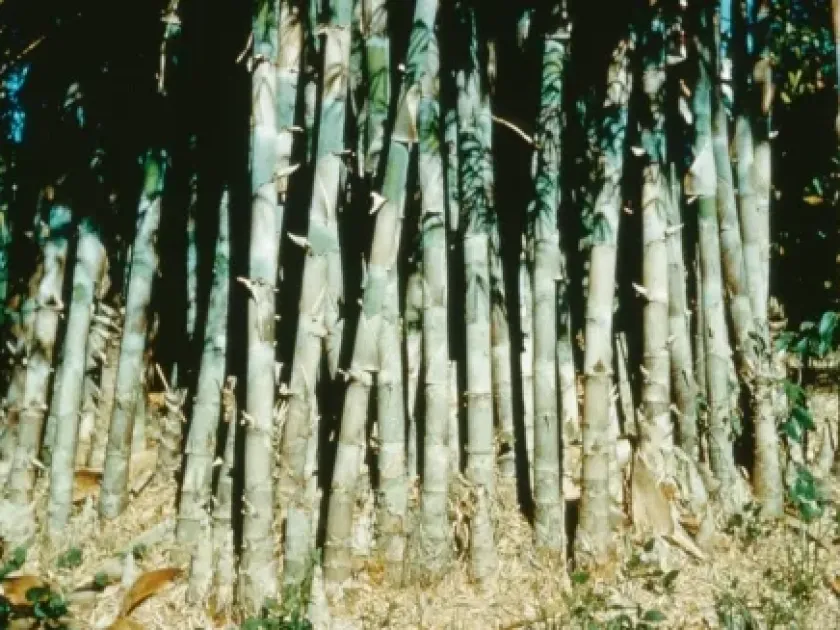
Bambusa polymorpha is a significant species belonging to the Poaceae family, widely recognized for its robust growth and economic utility. It is a large, sympodial bamboo species characterized by densely tufted culms that can grow up to 20 meters in height, making it a critical resource in tropical forestry.
Native to the regions of Southeast Asia, including Myanmar and Thailand, this species thrives in tropical climates with abundant moisture. It is particularly well-adapted to environments where seasonal rainfall patterns support rapid vegetative development and biomass accumulation.
In terms of edaphic requirements, the plant prefers deep, fertile, and well-drained loam soils. It is highly sensitive to waterlogged conditions, requiring sites with excellent soil aeration to prevent root rot, and it performs best in soils with a slightly acidic to neutral pH level.
Climate management is essential, as Bambusa polymorpha requires warm temperatures year-round to maintain optimal metabolic rates. It lacks cold tolerance, and frost exposure can significantly hinder growth or lead to plant mortality in regions outside of its natural tropical distribution.
Successful agricultural management involves systematic plantation design, ensuring adequate spacing between clumps to facilitate air circulation and nutrient access. Regular applications of organic mulch and nitrogen-rich fertilizers during the rainy season are recommended to maximize culm quality and yield.
Yield
The industrial applications of this species are extensive, ranging from traditional construction and scaffolding to the production of high-quality furniture and floorboards. Its mechanical properties, including tensile strength and durability, make it a preferred material for sustainable development projects.
Beyond timber production, Bambusa polymorpha is an important source of edible bamboo shoots, which are harvested for local and export markets. Furthermore, the species plays a vital role in environmental conservation by protecting riverbanks and preventing soil erosion in fragile ecological zones.
Main diseases and pests
The main biological threats include fungal pathogens such as bamboo rust and culm blight, which often flare up in high-humidity environments. Insect pests, particularly bamboo borers and aphids, represent a constant challenge, necessitating integrated pest management strategies to protect the crop.
Harvesting
Harvesting typically begins once the culms reach maturity, usually between 3 to 5 years after growth. Selective harvesting is the preferred agronomic practice, as it removes mature stems while leaving younger ones to mature, ensuring the long-term sustainability and productivity of the bamboo grove.