
Austrocylindropuntia vestita
Austrocylindropuntia vestita
Description
Growing requirements
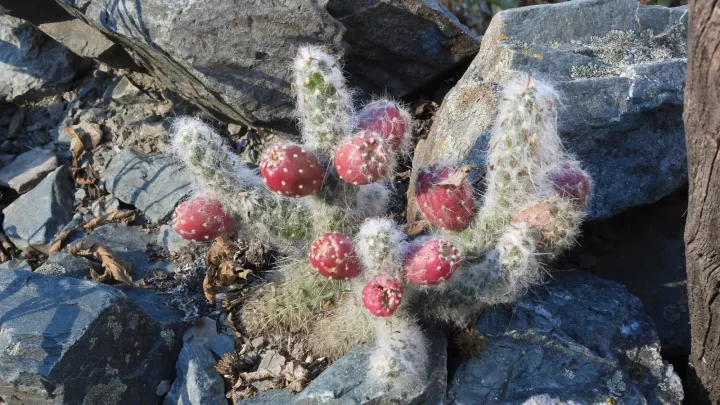
Austrocylindropuntia vestita is a fascinating member of the Cactaceae family, native to the high-altitude regions of the Andes. This cactus is widely recognized for its cylindrical stems completely covered in dense, white, hair-like spines, which give it a unique, furry appearance.
These specialized hairs are a biological adaptation to the extreme environment of the Bolivian plateau, providing insulation against cold nights and protection from the intense solar radiation found at high elevations in the native range.
For successful cultivation, this species requires a very gritty, well-draining substrate. Using a mix of coarse sand, pumice, and minimal organic compost is recommended to ensure that water does not linger around the root system, which is prone to rot.
Sunlight is the most critical factor for maintaining the health and density of the hair covering. Plants should be placed in a south-facing spot where they can receive direct sunlight for several hours a day to prevent etiolation.
During the dormant winter season, the cactus should be kept in a cool, dry place. Reducing temperatures to 5-10 degrees Celsius and withholding water almost entirely helps to mimic the natural winter conditions of its high-altitude habitat.
Main diseases and pests
Root rot is the most common health issue for Austrocylindropuntia vestita, typically caused by overwatering or poor drainage. Once rot sets in, it spreads rapidly through the succulent tissues, making prevention via strict watering control essential.
Mealybugs are the primary pest threat to this cactus. These pests hide effectively within the dense, white hairs, making them difficult to detect until the plant's growth is stunted or small white clusters become visible on the stems.
Spider mites are another concern, especially in indoor environments where the air is dry and stagnant. They feed on the epidermis, often leaving tiny yellow or brown scars that permanently disfigure the surface of the cactus stems.
If an infestation occurs, applying systemic insecticides or horticultural oils is necessary. It is crucial to use a fine spray and ensure thorough coverage, especially targeting the areas where the hairs meet the stem, where pests tend to congregate.
To avoid fungal diseases and moisture-related issues, growers must maintain good air circulation around the plants. Proper ventilation helps keep the epidermis dry and reduces the chances of infection when environmental humidity rises unexpectedly.