
Austrocylindropuntia floccosa
Austrocylindropuntia floccosa
Description
Growing requirements
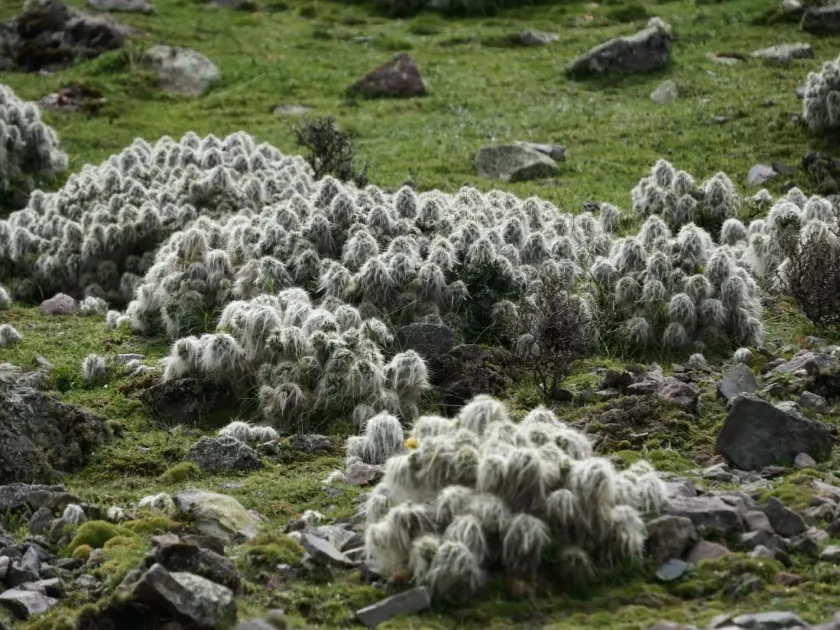
Austrocylindropuntia floccosa is a distinctive member of the Cactaceae family, native to the high-altitude regions of the Andes. These plants are adapted to harsh environments at elevations reaching up to 4500 meters above sea level, making them true alpine specialists.
The plant is recognized by its dense, cushion-like growth habit and thick covering of long white woolly hairs. This unique morphology is an evolutionary adaptation that serves as protection against intense ultraviolet radiation and keeps the plant warm during freezing mountain nights.
In cultivation, this species requires a highly mineral-based, porous growing medium. A mix containing a large portion of coarse sand, perlite, and volcanic rock is ideal to ensure rapid drainage, as the roots are highly susceptible to rot.
Full spectrum sun exposure is non-negotiable for this cactus. In greenhouse or indoor conditions, ensure it receives the maximum amount of light available to maintain its dense, compact structure and promote its natural white appearance.
The growth cycle follows a cool and dry pattern. During the summer, moderate water is needed, while the winter months require a strict dormancy period in cold, dry conditions to prepare the plant for the following growth season.
Main diseases and pests
Mealybugs are the primary pests that affect this species. Their presence is often difficult to detect early due to the dense white hairs, so consistent monitoring of the stem bases and growth tips is essential to prevent infestation.
The most significant threat to the survival of Austrocylindropuntia floccosa is overwatering, which quickly leads to catastrophic root and stem rot. Maintaining a proper balance of airflow and moisture levels is the most critical aspect of managing the health of this delicate cactus.