
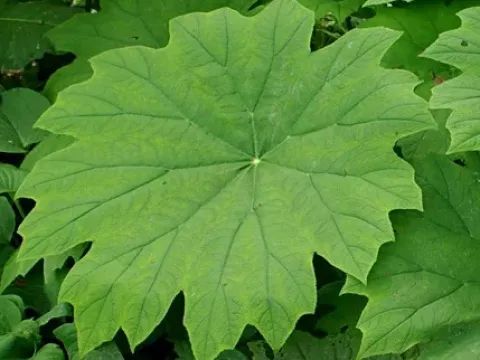
Astilboides tabularis
Astilboides
Astilboides tabularis is a distinct perennial plant belonging to the Saxifragaceae family. In horticultural practice, it is primarily propagated by division of the rhizomes, ideally performed in early spring or late summer.
What the section contains

Astilboides tabularis
Seed propagation is less common due to the long germination cycle and the slow development of young plants, requiring a period of cold stratification to overcome natural dormancy.
When dividing mature clumps, it is essential to ensure that each section contains at least two or three vigorous growth buds to promote rapid establishment in the garden soil.
Spacing is a crucial factor during planting, as the large, umbrella-like leaves can spread significantly; a distance of at least 60–80 cm between individual plants is recommended.
Once planted, deep irrigation is necessary to settle the soil around the roots and prevent air pockets, ensuring the rhizome remains moist until the root system is fully functional.
This species thrives in sheltered, shady environments, where it is protected from intense sunlight that can scorch its broad, delicate foliage during the summer months.
The ideal growing medium for Astilboides is a rich, moisture-retentive, organic-heavy soil that mimics the forest floor conditions characteristic of its native East Asian habitat.
While the plant requires consistently moist soil, it does not tolerate waterlogged conditions, making adequate drainage a mandatory requirement for long-term health and vigor.
Adaptability to temperate climates is a key feature of this species, allowing it to withstand cold winters effectively when the rhizomes are insulated by a layer of mulch.
Optimal pH levels for healthy foliage production range from slightly acidic to neutral, which ensures the plant can efficiently absorb necessary macronutrients from the substrate.
The primary threat to the ornamental integrity of Astilboides is damage caused by slugs and snails, which can quickly consume large portions of the thin, broad leaves.
Poor air circulation combined with high humidity levels can predispose the plant to fungal infections, including powdery mildew and localized leaf spots during wet seasons.
Root rot is a significant risk in poorly drained soils, often exacerbated by stagnant water accumulating around the rootstock during autumn or heavy spring rains.
Gardeners are advised to keep the planting site clean of leaf litter and debris, which serves as a hiding place for mollusks and a potential breeding ground for pathogens.
Using physical barriers or safe molluscicides can be an effective strategy to manage pest populations and maintain the visual appeal of the large, distinctive foliage.