
Yomena Aster
Aster yomena (Kitam.) Honda
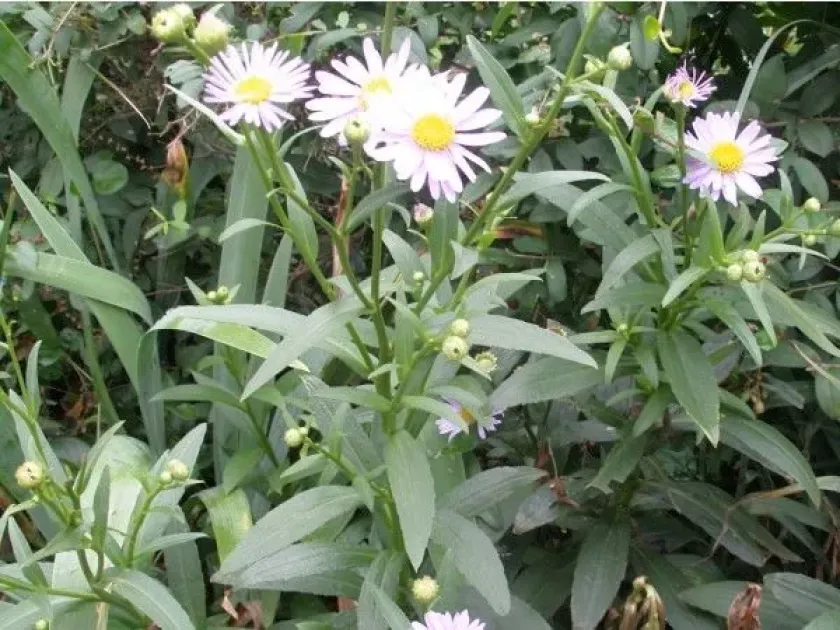
Description
Sowing dates
Sowing seeds of Aster yomena is best performed in the spring when the soil warms up to 12–15 degrees Celsius. For early seedling production, use greenhouses, sowing seeds in loose substrate during March.
When sowing directly into the open ground, it is important to ensure the seeding depth does not exceed 1 centimeter. Small seeds require surface distribution and light pressing against moist soil for optimal germination.
The plant propagates effectively through vegetative division of the rhizomes. This procedure is best planned for early spring or late autumn when the plant is in a dormant state.
An optimal planting scheme is 30 by 40 centimeters, which allows the bushes to develop fully without competing for sunlight. Adequate spacing is crucial for airflow and preventing fungal disease outbreaks.
To ensure successful root establishment, maintain consistent soil moisture during the first three weeks after planting. Regular watering during this period facilitates quick root development and adaptation to the site.
Growing requirements
Yomena Aster, a member of the Asteraceae family, is native to the wet meadows and riparian areas of East Asia. It thrives in well-lit locations but can tolerate light shade during the hottest parts of the day.
The culture has high moisture requirements, making regular irrigation essential in arid regions. Excessive soil drying leads to reduced aesthetic value and premature dropping of flower buds.
Soils should be fertile with a neutral to slightly acidic pH. On heavy clay soils, incorporating sand and organic matter is recommended to improve structure and drainage capacity.
The plant exhibits high cold hardiness, characteristic of species adapted to the climates of the Far East and Japan. It survives significant negative temperatures well, especially when protected by a layer of mulch.
Fertilization is performed twice a season: in the spring with nitrogen fertilizers to stimulate green growth and during the budding phase with phosphorus-potassium complexes to strengthen immunity and prolong blooming.
Yield
The economic value of Yomena Aster lies in its abundant and prolonged flowering, which creates dense carpets of light blue or purple blooms, making it a valuable asset in landscaping and floriculture.
In various Asian regions, young leaves and shoots are consumed as a culinary vegetable. They are prized for their vitamin and mineral content, which imparts a unique flavor to dishes.
In traditional medicine, the aster is used as an auxiliary remedy due to its bioactive components. Harvesting raw material for medicinal purposes occurs during the active growth phase before seed formation.
The productivity of the bush as a decorative element is maintained at a high level for 5–7 years in one location. After this period, rejuvenation through division is recommended to maintain quality.
The total biomass of the plant increases significantly with proper care, allowing Yomena Aster to be used for greening problematic areas with high soil moisture levels.
Main diseases and pests
The primary threats include fungal diseases such as powdery mildew, which develops in stagnant air and high humidity. Systemic fungicides are effective for control.
Root rot can affect plants under poor drainage conditions or waterlogging. Prevention lies in strict irrigation management and ensuring high-quality drainage at the time of planting.
Common pests include aphids and spider mites, which feed on young leaves and weaken the bush. Regular monitoring allows for timely detection and management of pest colonies.
Slugs and snails can cause mechanical damage to young shoots during wet weather. Biological control methods or protective barriers around the flower beds are often used to mitigate this risk.
- Thinning dense plantings to improve air circulation.
- Using mulch to suppress weeds and maintain soil health.
- Removing infected plant parts to prevent spore spread.
Harvesting
Harvesting for cut flowers is best performed in the morning when buds are just beginning to open. This ensures maximum vase life and an attractive appearance for floral arrangements.
For medicinal or culinary use, harvest only the young upper portions of the stems with leaves. The optimal harvest time is before the start of the flowering period to maximize nutrient concentration.
Drying of the raw material should occur in a well-ventilated area away from direct sunlight to preserve essential oils and volatile compounds that determine the plant's quality.
Seed harvesting is conducted in late September as the pods mature. Seeds typically show a high germination rate when stored in a cool, dark, and dry environment until the next season.
After the first frost in autumn, the above-ground part of the plant is cut back nearly to the soil level. This helps the bush prepare for winter and prevents mold development on decaying stems.