
Aristolochia moupinensis
Aristolochia moupinensis
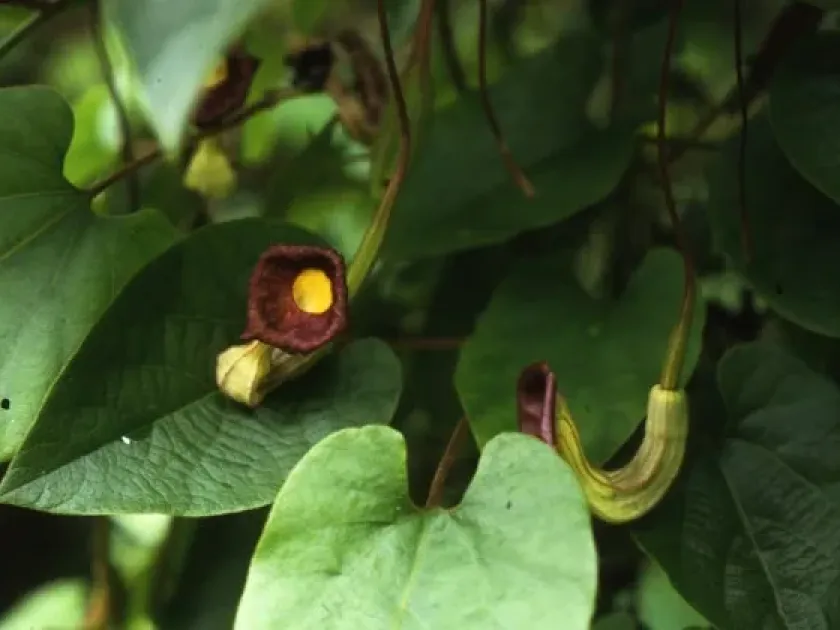
Description
Sowing dates
Propagation of Aristolochia moupinensis is primarily achieved through seeds or semi-hardwood cuttings taken during the active growth phase in summer.
When sowing seeds, it is essential to provide a well-draining, nutrient-rich substrate and maintain consistent moisture for successful germination.
Stratification is highly recommended to break seed dormancy, ensuring more uniform emergence of seedlings when temperatures rise in the spring.
The seeds should be sown at a depth of about 1 to 2 cm and kept in a warm, bright environment, protected from direct exposure to intense midday sun.
Once seedlings have developed several true leaves, they should be carefully transplanted into larger pots to encourage vigorous root development.
Growing requirements
This species, belonging to the Aristolochiaceae family, is a deciduous climber originating from the mountainous regions of central and western China.
The plant thrives in partial shade, as the leaves can suffer from desiccation if exposed to prolonged periods of direct sunlight in hot climates.
Soil requirements include a preference for humus-rich, fertile, and moist-retentive ground that offers excellent drainage to prevent root rot.
Regular irrigation is vital during the establishment phase, particularly during dry spells, to support the rapid development of its foliage.
Structural support, such as a sturdy trellis or a fence, is mandatory for this vine to exhibit its full decorative potential as a climbing ornamental.
Main diseases and pests
Common issues include fungal infections such as powdery mildew, which often develop when air circulation is poor or humidity levels are excessively high.
Pests like spider mites and aphids can infest the young shoots, necessitating vigilant monitoring and timely intervention to prevent plant stress.
Root rot caused by stagnant moisture is a critical threat that can lead to rapid decline; therefore, avoiding waterlogged soil conditions is essential.
The application of insecticidal soaps or horticultural oils is effective for managing minor pest outbreaks without harming the surrounding beneficial flora.
Regular maintenance, including the removal of dead or crossing branches, improves overall plant health and minimizes suitable habitats for diseases.