
Aristolochia maxima
Aristolochia maxima
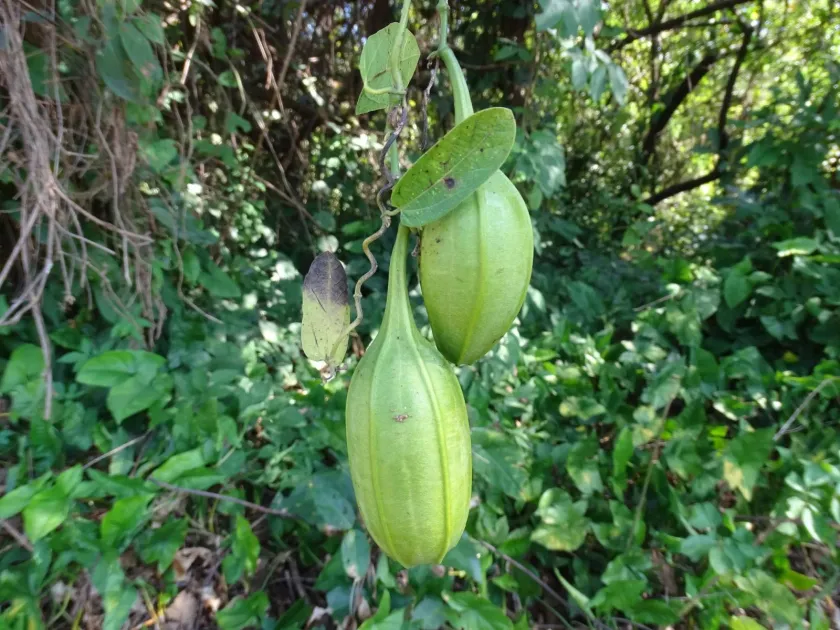
Description
Growing requirements
Aristolochia maxima is a vigorous woody climber belonging to the Aristolochiaceae family, native to the tropical forests of Central and South America. It is prized for its substantial foliage and unique, pipe-shaped floral structures.
This species thrives in warm, humid climates and requires significant protection from frost. It prefers nutrient-rich, well-draining soils that maintain consistent moisture levels, mimicking its natural rainforest habitat.
Botanically, the plant is characterized by its broad, cordate leaves and large, uniquely shaped flowers designed for complex pollination. As it matures, the vine stems become lignified, requiring sturdy structures to support its heavy mass.
Cultivation practices involve providing robust trellises or supports to accommodate its aggressive growth habit. Fertilization with balanced organic or mineral blends during the peak growing season is necessary to support its biomass expansion.
Economically, Aristolochia maxima is primarily utilized in ornamental horticulture for vertical landscaping. It is highly effective for screening unsightly structures or creating shaded, dense living barriers in tropical and subtropical gardens.
Main diseases and pests
Root rot represents the primary threat to the plant, usually resulting from poor soil drainage or excessive irrigation. Maintaining an airy, well-drained substrate is the most effective preventative measure against soil-borne pathogens.
Pest issues often include infestations of spider mites or aphids, which target the underside of the leaves. Integrated pest management, including regular inspection and horticultural soap applications, is recommended to manage populations.