
Aristolochia lutea
Aristolochia lutea
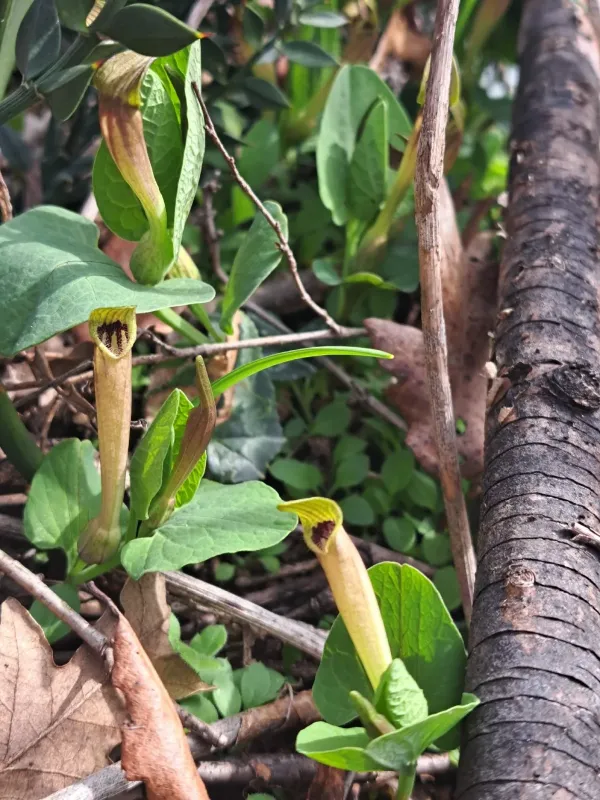
Description
Sowing dates
Sowing Aristolochia lutea in a cultivation setting is primarily done using seeds, which require stratification to improve germination rates. The optimal time for sowing is during the late autumn, as the seeds need a period of cold temperatures to sprout in the spring.
During the spring period, seeds can be sown once the soil has warmed up, though it is important to note that seedling development proceeds slowly. The seeds should be planted at a depth of no more than 1–2 centimeters to ensure sprouts emerge effectively.
For vegetative propagation, rhizome division is used, which is best performed in early spring before active sap flow or at the end of the vegetation period. This allows the plant to root more quickly in the new location.
The chosen site should be oriented towards partial shade, as prolonged exposure to direct sunlight can suppress young seedlings. Before sowing, the soil must be carefully prepared by removing weeds and adding organic fertilizers.
To establish optimal plant density, specific planting patterns are followed to provide sufficient air circulation, which prevents the development of fungal infections in dense plantings.
Growing requirements
Aristolochia lutea belongs to the Aristolochiaceae family and is a perennial herbaceous plant with well-developed rhizomes. In the wild, it prefers damp, shaded forests and slopes, which dictates its primary growth requirements.
The crop has high soil fertility requirements; the best conditions are loose, humus-rich, and adequately moist loams. Waterlogging of the site is unacceptable, so installing drainage is an essential agronomic practice in heavy soils.
The plant possesses moderate winter hardiness and can withstand sub-zero temperatures when snow cover is present. During harsher winters, mulching the root zone with peat or fallen leaves is recommended to protect the root system from freezing.
Climate conditions in the temperate zone are favorable for cultivating this crop. An important factor is maintaining stable soil moisture throughout the vegetation period, especially during the phase of active shoot growth.
For normal development, Aristolochia lutea requires support, as its shoots tend to trail or twine weakly if there are no vertical surfaces or adjacent plants nearby.
Yield
The yield of Aristolochia lutea is assessed based on the output of above-ground green biomass and the volume of rhizomes used in pharmacology. A stable harvest can be achieved 3–4 years after planting, once the plant has fully adapted to the site conditions.
Raw material harvesting is conducted during the period of active flowering, when the concentration of biologically active substances in leaves and stems reaches its peak. It is important to harvest in dry weather to avoid rotting of the material during the drying process.
With proper crop care, the output of marketable mass can reach several tons per hectare, depending on the intensity of agronomic activities such as regular nitrogen-phosphorus fertilization and irrigation.
Rhizomes are harvested in late autumn or early spring when the above-ground part of the plant dies off, and nutrients are concentrated in the underground organs. This ensures high-quality medicinal raw material.
To increase yield, periodic renewal of plantations via bush division is recommended, which prevents degradation and reduction of plant organ size under long-term cultivation on the same plot.
Main diseases and pests
Aristolochia lutea possesses specific defensive properties, containing aristolochic acid in its tissues, which makes it less attractive to many pests. However, certain problems may occur in intensive cultivation settings.
The main pests are leaf-eating insects and slugs, which can damage young foliage during rainy weather. Timely soil cultivation and weed removal reduce the risk of massive infestations.
Among diseases, root rot is the most dangerous, occurring due to disrupted water balance and excessive moisture. Fungal leaf infections manifest as spots, requiring fungicide treatment at early stages.
- Powdery mildew if humidity levels are not maintained.
- Root rot during waterlogged soil conditions.
- Slug damage in shaded areas.
To manage diseases, adhering to crop rotation and avoiding dense planting is recommended, as high density impedes normal air circulation and promotes moisture retention on leaves, triggering infections.