
White-veined Dutchman's pipe
Aristolochia leuconeura
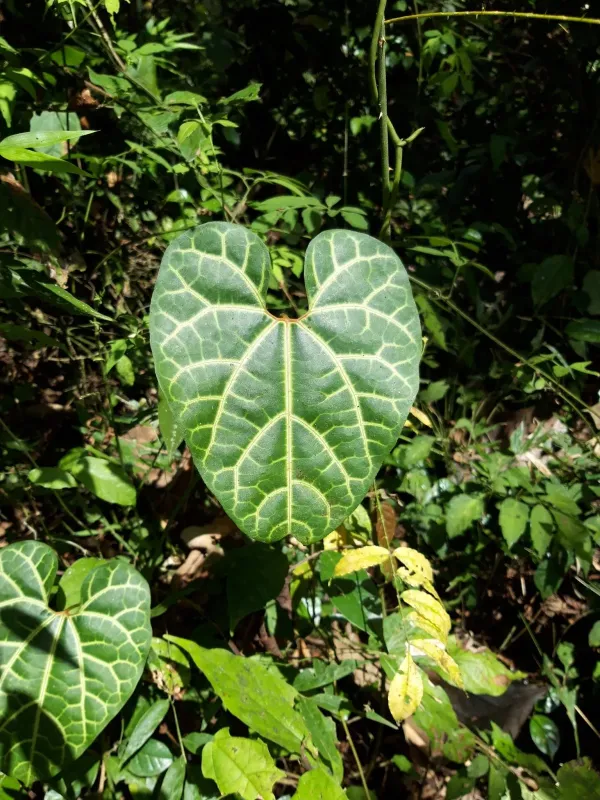
Description
Growing requirements
The white-veined Dutchman's pipe (Aristolochia leuconeura) is an evergreen woody climber belonging to the Aristolochiaceae family. Originating from the tropical rainforests of Central and South America, it is prized for its large, heart-shaped leaves with striking white venation.
To thrive, this plant requires a tropical environment with temperatures consistently between +20°C and +25°C. It is intolerant to frost and cold drafts, making it strictly a greenhouse or indoor plant in temperate regions.
The ideal growing medium is a well-draining, nutrient-rich potting mix composed of peat moss, leaf mold, and perlite. A pH level ranging from slightly acidic to neutral is optimal for nutrient uptake and root health.
Proper lighting is essential; the plant thrives in bright, indirect light. Direct sunlight can cause scorching of the leaves, while insufficient light will lead to spindly stems and loss of the characteristic leaf pattern.
Regular maintenance involves providing a sturdy vertical support system, as the vine possesses vigorous twining stems. Watering should be consistent, ensuring the medium stays moist but never waterlogged to prevent root issues.
Main diseases and pests
Common pests affecting Aristolochia leuconeura include spider mites and scale insects, which often thrive in indoor conditions with low air humidity.
Fungal issues, such as root rot and leaf spot diseases, are the primary health threats, usually triggered by poor drainage, overwatering, or insufficient air circulation.
Preventative measures include maintaining proper sanitation in the greenhouse, regular inspection of the underside of the leaves, and avoiding wetting the foliage during watering.
When infestation occurs, use insecticidal soaps or systemic pesticides suited for greenhouse crops, ensuring thorough coverage of the stems and both sides of the leaf blades.
Gardeners should handle the plant with caution, using protective gloves during pruning, as all parts of the plant contain aristolochic acid, which is toxic if ingested and may cause skin irritation.