
Aristolochia indica
Aristolochia indica
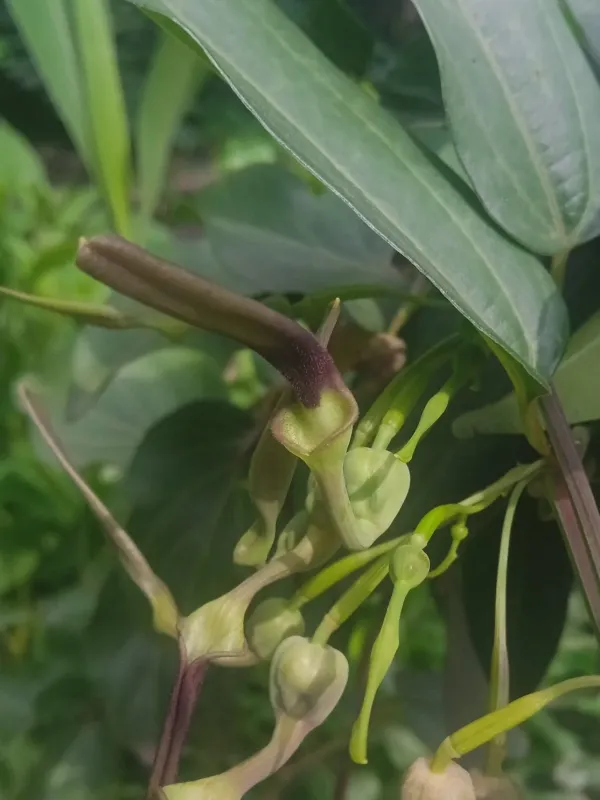
Description
Sowing dates
Aristolochia indica, commonly known as Indian birthwort, is a perennial climbing plant belonging to the Aristolochiaceae family. Propagation is primarily achieved through seeds, which require specific conditions for successful germination.
Seeds should be sown in a well-draining, nutrient-rich potting medium during the warm season. Keeping the soil temperature consistently above 25°C is critical to achieving high germination rates within the first few weeks.
Once seedlings develop their first true leaves, they should be transplanted into larger containers or prepared garden plots with adequate space for root expansion. Proper drainage is essential at every stage of plant development.
As a climbing plant, the species requires an initial stabilization period. Providing a trellis or wire support shortly after transplanting encourages natural growth patterns and prevents stem damage.
Success in sowing relies heavily on seed quality and freshness, as stored seeds may exhibit reduced viability over time. Controlled environment agriculture is the most reliable method for year-round production.
Growing requirements
This crop thrives in tropical and subtropical climates, necessitating high temperatures and relatively stable environmental conditions. It prefers locations with bright, filtered sunlight to avoid leaf scorching.
The soil should be light, sandy, or loamy with high organic matter content and excellent aeration. A pH range between 6.0 and 7.0 is considered optimal for nutrient uptake and overall plant health.
Regular irrigation is necessary, particularly during the active growth phase. However, the soil must never become waterlogged, as the roots are highly susceptible to rot under anaerobic conditions.
Environmental humidity should be maintained at moderate to high levels. In greenhouses, periodic misting can mimic the plant's native habitat, leading to more vigorous vine growth and better foliage development.
Adequate space between rows is vital to ensure good air circulation, which helps manage micro-climatic humidity and reduces the incidence of fungal pathogens that thrive in stagnant conditions.
Yield
Yield estimation for Aristolochia indica involves measuring the dry weight of harvested aerial parts and roots. The medicinal value lies in the concentration of aristolochic acid, which requires precise cultivation timing.
Harvesting is typically carried out after the plant reaches maturity, which is often around 18 to 24 months post-planting. Selective harvesting techniques are used to preserve the plant's ability to regenerate.
Good agricultural practices, such as consistent fertilization and pest management, can significantly increase the total biomass produced per hectare. Balanced nutrition, particularly phosphorus and potassium, supports root quality.
Post-harvest processing involves drying the material under controlled temperatures to prevent degradation of active phytochemicals. Proper storage in cool, dry conditions is required to maintain product shelf life.
As the plant is primarily used in specialized pharmaceutical applications, quality standards focus on the consistency of active compound profiles, which is achieved through standardized farming practices.
Main diseases and pests
The plant is frequently targeted by specialized lepidopteran larvae, specifically swallowtail butterflies, which consider the Aristolochia genus a primary host. These insects can cause massive defoliation if left unmanaged.
Root rot caused by Pythium or Phytophthora species represents a significant threat during periods of excessive moisture or improper drainage. Early detection is essential for effective mitigation.
Fungal issues such as powdery mildew can occur when humidity levels remain high without sufficient airflow. Cultural practices, such as pruning and spacing, serve as the first line of defense.
Aphids and whiteflies can serve as vectors for various plant viruses, leading to stunted growth and yellowing of the leaves. Regular scouting is required to monitor populations and intervene when necessary.
Integrated Pest Management (IPM) strategies are strongly recommended to ensure that the final medicinal product remains free from harmful chemical residues, prioritizing organic biological controls where possible.