
Aristolochia galeata
Aristolochia galeata
Description
Growing requirements
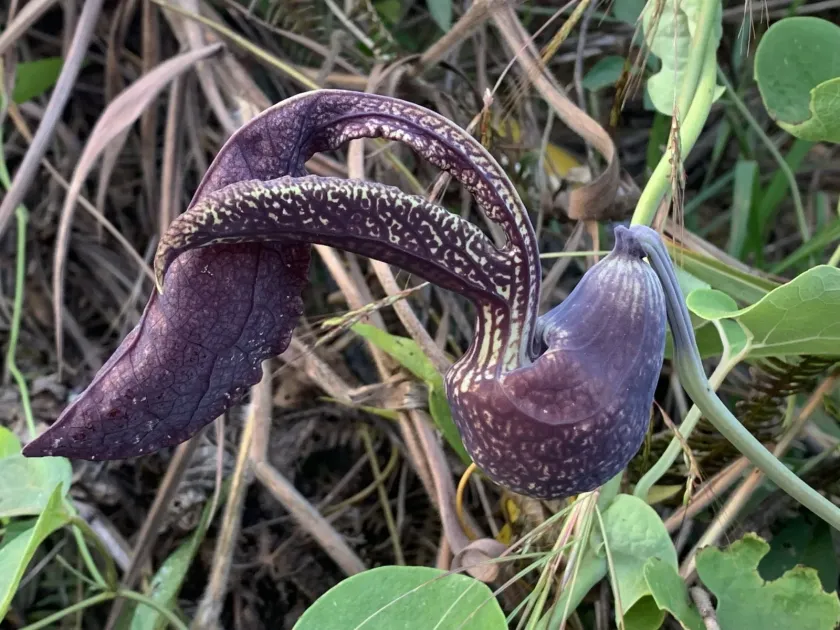
Aristolochia galeata is a perennial woody vine belonging to the Aristolochiaceae family. Originating from the tropical forests of South America, this plant is highly prized for its unique, helmet-shaped flowers which serve as a specialized trap for pollinators.
This species is strictly a tropical plant, requiring a controlled environment such as a greenhouse or conservatory in temperate climates. It thrives best in environments where temperatures remain consistently between 20°C and 28°C, and frost must be avoided at all costs.
The ideal soil for cultivation is a nutrient-rich, well-draining mixture containing organic matter like peat or leaf mold. Maintaining consistent soil moisture is crucial, yet the drainage must be efficient to prevent the roots from becoming waterlogged.
Regarding light, this plant prefers bright, filtered sunlight. Exposure to direct, intense midday sun should be minimized to protect the large, heart-shaped leaves from scorching, as they are adapted to the understory conditions of tropical rainforests.
The growth habit of this vine requires robust support systems. Because it is a vigorous climber, growers often provide vertical wires, trellises, or nets to facilitate its upward expansion. Regular pruning is also essential to manage the plant's size and promote dense growth.
Main diseases and pests
Common pests include spider mites and mealybugs, which are particularly troublesome in the dry conditions of indoor heating. Keeping the humidity high and inspecting leaves regularly are standard practices to prevent significant infestations.
Fungal diseases like root rot are common if the soil remains too wet for extended periods. To mitigate these risks, it is advised to use pots with ample drainage holes and to ensure proper air circulation throughout the foliage canopy.