
California Dutchman's pipe
Aristolochia californica
Description
Growing requirements
California Dutchman's pipe (Aristolochia californica) is a deciduous woody vine belonging to the Aristolochiaceae family. Native to California, this plant is typically found in moist canyons and along streams, reflecting its preference for high-humidity environments.
The plant thrives in partial shade and requires deep, well-draining, humus-rich soil to establish a healthy root system. It is intolerant of long periods of drought and requires consistent watering, especially during the peak growing season in the spring.
As a vigorous climber, Aristolochia californica needs sturdy supports like trellises or fences to reach its full potential. It is a slow grower initially, but once established, it provides excellent vertical green coverage for landscapes.
Climatically, it prefers regions with mild winters. In areas with significant frost, the vine may die back to the ground or require protective mulching to survive the cold season. Adequate air circulation is necessary to support its growth.
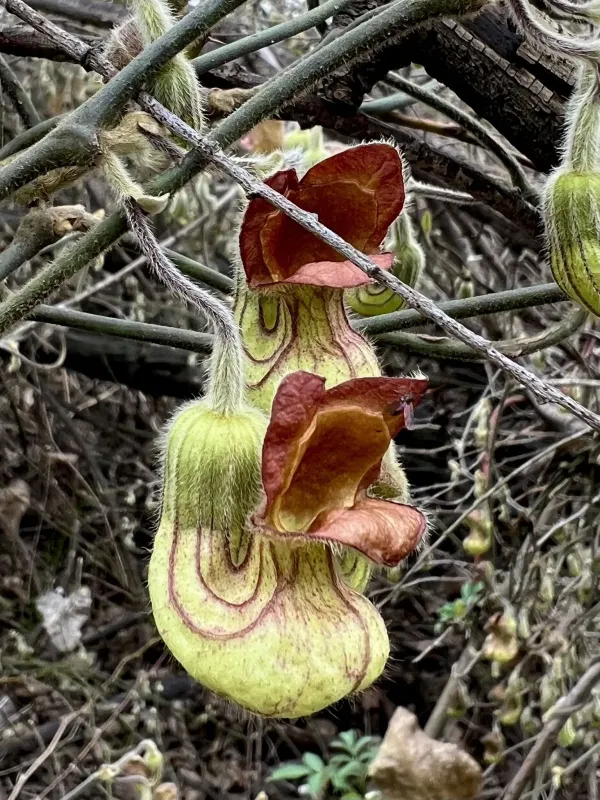
The botanical unique selling point of this species is its peculiar pipe-shaped flowers with purplish-brown veins. These blooms are not only visually striking but also demonstrate complex evolutionary strategies for specialized insect pollination.
Main diseases and pests
Aphids are the most common pest observed on the tender growth of this vine. If left untreated, they can cluster on the undersides of leaves and cause stunted development, so timely monitoring is highly recommended.
Powdery mildew can affect the foliage during periods of high humidity and poor air movement. Keeping the leaves dry by using ground-level irrigation and pruning to thin out overgrown vines helps mitigate this fungal issue.
Root rot is a significant danger if the soil remains waterlogged for extended periods. Ensuring the planting site has excellent drainage is the most effective way to prevent this lethal condition from developing.
While the plant is often avoided by many herbivores due to chemical defenses, certain butterfly larvae may feed on the leaves. In a residential garden setting, this damage is generally cosmetic and rarely requires chemical intervention.
Regular sanitation, such as removing dead or diseased wood during the dormant season, is a crucial part of the maintenance program. This practice significantly reduces the overwintering sites for pathogens and insects.