
Aristida vagans
Aristida vagans
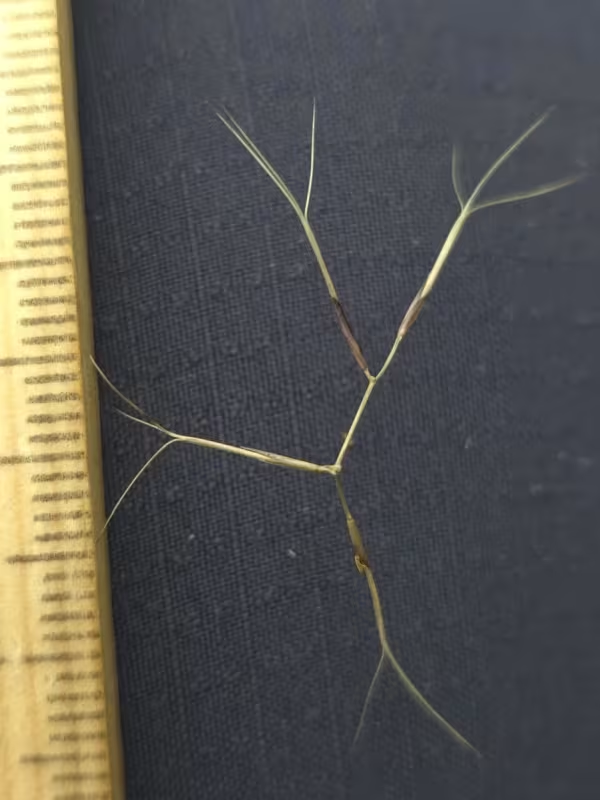
Description
Sowing dates
Aristida vagans is a perennial grass belonging to the Poaceae family. In its natural habitat, the seeds of this plant exhibit high germination rates when provided with sufficient soil moisture during the spring season.
Sowing should be performed early in the spring as soon as the soil warms up to optimal temperatures. To ensure effective germination, it is critical to achieve proper seed-to-soil contact at a depth of no more than 1-2 centimeters.
This crop demonstrates a significant ability to root quickly, making it a promising candidate for the initial reclamation of low-productivity or barren lands. Using stratified seeds can further enhance the vigor of seedlings in field conditions.
When grown as a forage crop, it is essential to follow recommended seeding rates to prevent overcrowding, which is vital for the development of the root system. Row seeding is the preferred method to allow adequate light and air circulation to the tillering node.
While optimal sowing windows vary by climatic region, the general practice is to avoid late frosts that could damage young seedlings after emergence.
Growing requirements
Aristida vagans is noted for its ecological plasticity and its ability to thrive on poor, sandy, or loamy soils where other grass species would fail to produce significant biomass.
The plant exhibits remarkable drought tolerance due to its specialized leaf structure and an extensive root system capable of reaching deep soil horizons. Optimal growth conditions include well-lit areas with good drainage.
While the plant tolerates a wide range of soil pH levels, it performs best in neutral to slightly acidic environments. Aristida is frequently utilized in soil conservation programs to prevent erosion on slopes and exposed terrains.
Climatic requirements involve moderately warm summers and sufficient sunshine during the flowering stage. The species remains viable even during prolonged dry spells due to its hardy vegetative organs.
Though nitrogen fertilization during early growth stages can significantly boost biomass production, Aristida is capable of maintaining stable growth even in nutrient-poor substrates.
Yield
The biomass yield of Aristida vagans depends heavily on the intensity of its management and the level of agronomic practices applied to the pasture or hay field.
On average, under favorable weather conditions, the crop provides a stable harvest of hay, which offers moderate nutritional value suitable for maintaining livestock throughout the winter season.
The plant's biological traits allow for multiple regrowth cycles within a single season, provided that the timing of mowing is managed correctly and soil moisture remains adequate.
Peak productivity is generally achieved within the first 3-4 years, after which reseeding or pasture rejuvenation is recommended to maintain the density of the stand.
Economic utility also extends to seed harvesting, as the seeds are highly viable and can be repurposed for large-scale land rehabilitation projects.
Main diseases and pests
The primary phytopathological threats to Aristida stands are fungal diseases, which tend to develop under conditions of high humidity and poor air circulation within dense foliage.
Cereal rust can affect the leaf surface, reducing the plant's overall photosynthetic activity and limiting the total biomass harvested during the growing season.
Among pests, larvae of various grass fly species pose the greatest threat, as they can damage stems and lead to the wilting of individual shoots.
Management strategies include strict crop rotation practices and the removal of weeds, which often serve as alternative hosts for various pathogens.
If disease outbreaks are detected, the application of specialized fungicides or insecticides approved for use on forage grasses is necessary to mitigate crop loss.
Harvesting
Harvesting for hay should be carried out during the mass heading stage, when the plant has maximized its nutrient accumulation before the stems become too lignified.
When utilized for grazing, it is vital to manage the intensity of feeding to avoid overgrazing below the growth point, which ensures faster recovery of the aftermath.
For seed collection, harvesting should occur at the stage of full physiological maturity, identifiable by the characteristic browning of the panicles.
Mechanical harvesting is conducted using standard mowing and baling equipment, making the process cost-effective for large-scale agricultural operations.
After harvesting, proper drying of the hay is essential to preserve its nutritional quality and prevent mold formation during storage in stacks.