
Aristida calycina
Aristida calycina
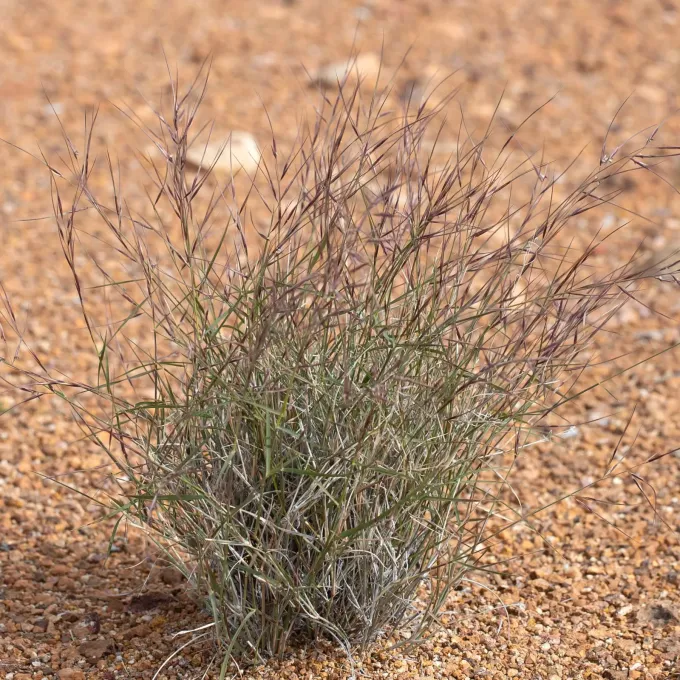
Description
Sowing dates
Aristida calycina is a perennial grass species within the Poaceae family, recognized for its resilience in various soil environments. It is often utilized in projects focused on land restoration and pasture development.
The optimal sowing time for this species is early spring. The soil temperature should be consistently warm, ideally between 15 and 20 degrees Celsius, to support robust germination of the seeds.
Seeds of Aristida calycina are small and should be planted at a shallow depth of no more than one centimeter. Broadcasting followed by light harrowing or roller compaction is recommended for field-scale planting.
Adequate moisture is required during the initial germination phase. In arid regions, supplemental irrigation for the first few weeks after sowing can significantly increase the establishment success rate.
Spacing between rows should be maintained to prevent overcrowding, which can inhibit the development of the root system and reduce the long-term vigor of the grass population.
Growing requirements
This grass thrives in well-drained, sandy to gravelly soils. It is particularly adapted to nutrient-poor sites where other competitive species might struggle, showcasing its role in pioneering successions.
Aristida calycina requires full sunlight to achieve maximum photosynthetic efficiency. It is highly intolerant of shade, which can lead to thinning of the stand and increased susceptibility to disease.
As a drought-tolerant species, it is highly suitable for arid and semi-arid climates. Its internal structure minimizes water loss, allowing the plant to remain green during moderate dry spells.
Soil pH preference is generally broad, ranging from slightly acidic to neutral. It does not require high levels of fertilization, although small inputs of phosphorus at establishment can boost early growth.
Proper aeration is essential for root health. Avoid compacted soils and manage grazing intensity to prevent the soil surface from becoming sealed and anaerobic, which would damage the perennial root system.
Yield
Aristida calycina is primarily used for livestock forage in extensive pasture systems. It provides reliable grazing material throughout the growing season when managed correctly through rotational systems.
Nutritional value is highest during the vegetative stage. As the plant approaches the heading and flowering stages, fiber content increases significantly, and overall palatability for livestock decreases.
Biomass yield is generally moderate but stable over many years. It is a persistent species that provides consistent ground cover, effectively reducing soil erosion in grazing environments.
Management should focus on maintaining a moderate grazing pressure to allow the plants to regenerate reserves in their root systems, ensuring productivity for multiple seasons.
In addition to forage, the plant is valuable for its soil-binding properties. It is often included in seed mixes designed for the rehabilitation of overgrazed or degraded lands.
Main diseases and pests
Fungal diseases, including rusts and leaf spots, can affect the crop under high humidity or poor ventilation conditions. Improving field drainage is the best preventative strategy.
Insect pests, such as aphids and leafhoppers, may cause damage to young shoots. If populations exceed economic thresholds, the application of targeted insecticides may be necessary.
Weed competition is most detrimental during the seedling establishment year. Regular mechanical cultivation or careful hand-weeding is recommended until the grass stand is sufficiently dense.
Rodent activity can be a concern, particularly in the winter months when they may chew on the base of the plant. Monitoring and standard pest control practices are advised for large-scale operations.
Improper nutrient management, specifically excessive nitrogen, can lead to succulent, weak growth that is more susceptible to both insect infestations and fungal infections.
Harvesting
Harvesting for hay should be timed before the plant reaches full maturity. Cutting at the early flowering stage ensures a balance between biomass volume and nutritional quality.
The harvested material must be dried efficiently to prevent spoilage. Using a tedder helps move and aerate the hay, ensuring a moisture content below 15% before baling for storage.
Seed production harvesting is conducted when the panicles show a golden hue and seeds start to shed easily. Timely harvest is critical to prevent significant losses due to natural seed dispersal.
Mechanical harvesting requires precise settings on the combine to ensure that seeds are threshed gently without being crushed, maintaining high viability for future planting.
Post-harvest residues should be managed by chopping or light disking into the soil to promote the recycling of organic matter and improve the soil structure for the next growing season.