
Aristida bipartita
Aristida bipartita
Description
Growing requirements
Aristida bipartita belongs to the Poaceae family. It is a perennial grass species recognized for its extreme resilience in arid and semi-arid environments, where water scarcity is the primary limiting factor for agricultural production.
The plant thrives in well-drained soils, including sandy loams and skeletal soils that are nutrient-poor. Its adaptive biology allows it to survive in regions with high solar radiation and prolonged dry seasons, making it a focus for sustainable rangeland management.
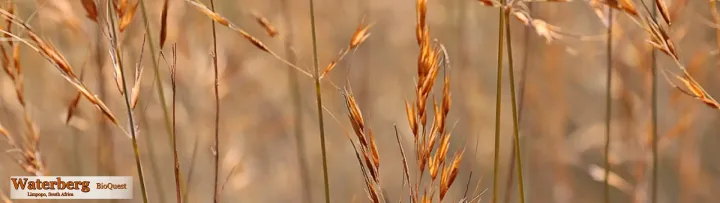
Botanically, it forms dense tufts or tussocks. The leaves are typically narrow and wiry, designed to minimize transpiration rates. This anatomical feature is crucial for maintaining physiological processes during thermal stress.
Climatic requirements are focused on high temperature and sunlight availability. It does not require high nitrogen levels or intensive irrigation, which classifies it as a low-input crop suitable for extensive grazing lands.
The role of this species in agroecosystems is largely to prevent soil erosion. By stabilizing surface soil with its deep and fibrous root system, it protects land that would otherwise be susceptible to wind erosion.
Main diseases and pests
Pathogenic fungi represent the most significant biological threat, particularly in microclimates where humidity levels occasionally rise above the plant's tolerance threshold, leading to foliar diseases.
Insect pests, primarily locusts and various grasshopper species, pose a consistent risk during outbreaks, as they can defoliate entire stands of the grass in a short timeframe, affecting pasture productivity.
Overgrazing is the major human-induced threat. Even though the plant is hardy, continuous removal of green foliage prevents the replenishment of starch reserves in the crown and roots, leading to plant death.
Root-knot nematodes can impact the vigor of the plant in specific soil conditions, though the prevalence of such infestations in its native arid range is generally lower than in irrigated crops.
Competition from invasive broad-leaved weeds is a major concern during the establishment phase, as the grass grows slowly until its extensive root system is fully developed and can compete for moisture.