
Aristida browniana
Aristida browniana
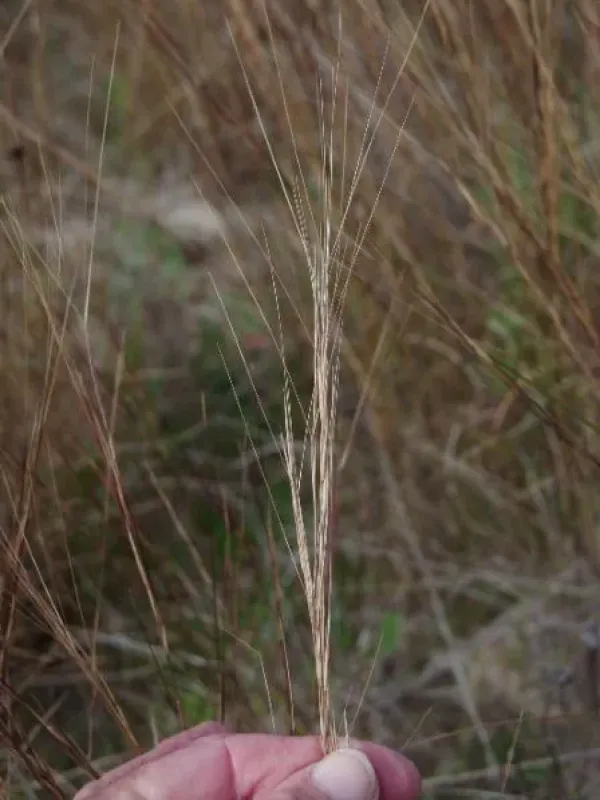
Description
Growing requirements
Aristida browniana is a perennial grass species belonging to the Poaceae family. This plant is well-known for its adaptation to the arid environments, primarily found in the sandy regions of the Australian interior.
The plant exhibits high resilience to extreme temperatures and prolonged droughts, which are characteristic of its native habitat. Its root system is particularly developed, allowing it to survive in sandy soils where moisture retention is extremely low.
Botanically, the plant grows in dense tussocks. Its leaves are typically narrow and tough, designed to limit water loss. This morphology makes it a successful species in dunes and barren sandy tracts where vegetation competition is minimal.
Regarding cultivation requirements, the species prefers well-drained, sandy soils and full sun exposure. It has very low nutrient requirements, as it has evolved to thrive in nutrient-poor substrates without the need for additional fertilizers.
In terms of agricultural utility, it serves as a source of forage for livestock in remote grazing areas. Beyond its feed value, it is essential for landscape restoration as it stabilizes sandy soil, thus acting as a natural barrier against wind erosion.
Main diseases and pests
The primary threats to Aristida browniana populations include overgrazing, which can degrade the plant community and leave the soil vulnerable to rapid wind erosion.
Insect pests such as locusts pose a significant threat during outbreak years, as they can decimate the foliage of the grass, limiting the available feed for livestock in desert regions.
Fungal pathogens are generally rare due to the arid environment, but they can occasionally affect the plant during unseasonably wet periods, potentially leading to localized decay.
Competition from invasive species can also threaten the health of these grasslands, especially in areas where human activity disturbs the natural soil structure.
Conservation management focuses on controlled grazing practices to ensure that the plant retains enough vegetative cover to survive annual fluctuations in rainfall.