
Aristida
Aristida aristidis
Description
Growing requirements
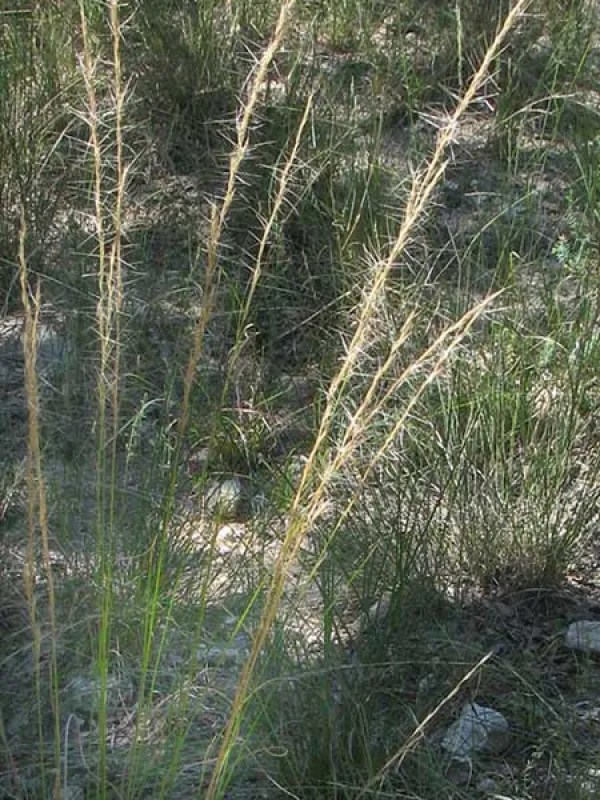
Aristida is a significant genus of plants within the Poaceae family. These plants, commonly known as three-awn grasses, are adapted to thrive in harsh, arid, and semi-arid environments where water availability is severely limited.
The morphology of Aristida is defined by its characteristic three-awned lemma, which serves as a protection mechanism for the seeds. Its deep, fibrous root system allows the plant to anchor securely in loose, sandy, or rocky soils and tap into deep moisture sources.
The geographic distribution of this genus covers wide areas of the tropics and subtropics, notably in Australia, Africa, and the Americas. It is a vital component of natural grasslands in these regions, forming the primary cover in desert-like conditions.
The crop demands minimal soil fertility and excels in well-drained, nutrient-poor substrates. Its photosynthetic pathway, often C4, makes it highly efficient in high-temperature climates with high irradiance.
In agriculture, Aristida is mainly utilized as forage for livestock during early growth stages. Beyond forage, it serves critical environmental roles, such as preventing soil erosion and stabilizing sand dunes in vulnerable ecosystems.
Main diseases and pests
The primary threats to Aristida stands include various fungal pathogens, such as rusts and smuts, which can proliferate when seasonal moisture levels become uncharacteristically high during the flowering phase.
Insect pests, particularly locusts and grasshoppers, represent a major threat, as they feed on the biomass and can cause significant damage to the plant's reproductive structures.
Overgrazing is the most significant human-induced threat, as it destroys the plant's basal foliage, leading to crown exposure and eventual death of the perennial bunchgrass.
Soil-borne nematodes can also jeopardize the health of the root system, particularly in regions experiencing prolonged dry spells followed by heatwaves.
Integrated pest management strategies for Aristida require careful control of grazing intervals and the maintenance of a healthy plant density to prevent the invasion of competing opportunistic weed species.