
Aristida torta
Aristida torta
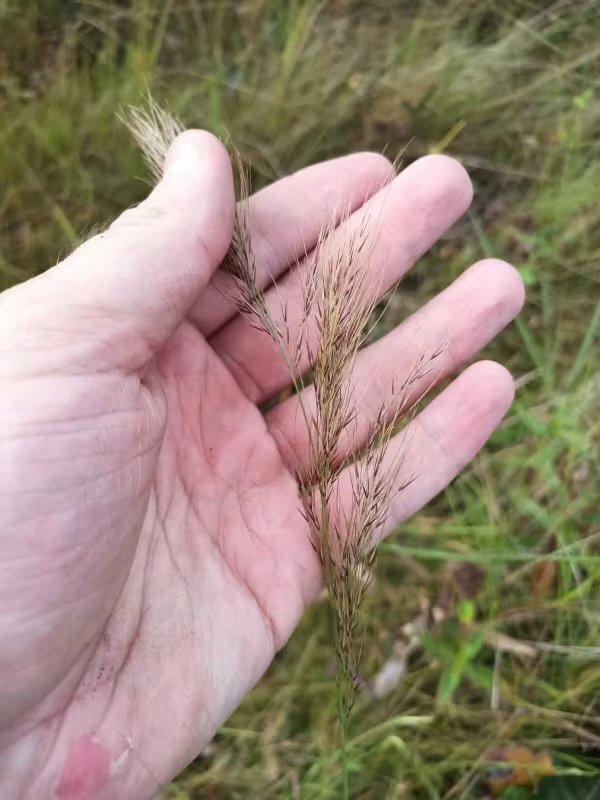
Description
Sowing dates
Aristida torta is a warm-season grass, and therefore, sowing should be timed to coincide with the arrival of stable, warm weather when soil temperatures reach 15-18 degrees Celsius.
The optimal planting window typically falls in late spring or early summer, aligning with the onset of the growing season and seasonal precipitation patterns.
The seeds of this species often exhibit low initial germination rates, which necessitates careful seedbed preparation to ensure optimal contact with the soil.
Seeding rates should be adjusted based on the purity and viability test results of the specific seed lot, ensuring they are not buried too deeply.
Post-sowing rolling of the field is highly recommended to improve moisture retention near the soil surface and to facilitate uniform germination across the plot.
Growing requirements
Belonging to the Poaceae family, Aristida torta is highly adapted to growing in poor, sandy, or loamy soil types where other crops might struggle.
This grass is strictly photophilous and cannot tolerate shading, making it essential to select open areas that receive full sunlight throughout the entire day.
It possesses excellent drought tolerance due to an extensive root system capable of mining water from deeper soil horizons during moisture-deficient periods.
The species thrives in well-drained conditions and is highly sensitive to waterlogged soils, which can lead to rapid decay of the root crown and stand loss.
While the plant is capable of surviving in nutrient-poor environments, appropriate nitrogen supplementation can significantly boost biomass production during growth.
Yield
The primary agricultural utility of Aristida torta lies in its role as a soil-stabilizing agent, helping to prevent wind and water erosion on degraded lands.
In early developmental stages, the green forage can serve as a supplementary component for livestock pastures, offering moderate nutritional value.
Biomass yield potential is largely dependent on the total rainfall received during the critical growth phases and the overall site fertility levels.
In conservation and restoration projects, the yield is often measured by the plant's capacity for rapid establishment and weed suppression in harsh habitats.
Harvesting for seed production is technically challenging due to the morphological structure of the florets, requiring specialized combine settings to minimize losses.
Main diseases and pests
Aristida torta generally exhibits robust natural resistance to most fungal pathogens that commonly affect moisture-dependent cereal crops.
Under conditions of prolonged high humidity, however, leaf spot diseases caused by Helminthosporium species can occasionally emerge.
The primary insect pests include wireworms (click beetle larvae), which can damage the root systems of young seedlings shortly after emergence.
Orthopterans, such as grasshoppers, may occasionally graze on the foliage, especially during years of high population densities, reducing the total available biomass.
Effective management strategies should focus on preventing overcrowding and ensuring adequate air circulation to minimize the risk of pathogen outbreaks.
Harvesting
Seed harvesting should be timed at full maturity when the inflorescences exhibit a straw-like color and are prone to shattering if delayed.
Timely harvest is critical for this species because the awns on the seeds can facilitate dispersal, leading to significant yield losses in windy conditions.
When cutting for forage, harvest should occur before the stems reach an advanced, lignified stage to ensure the highest possible feed quality.
Proper field drying of the cut biomass in windrows is essential to prevent spontaneous heating and mold development during storage.
Post-harvest processing involves cleaning the seeds with specialized air-screen cleaners to remove light chaff and awn fragments, ensuring easier planting.