
Aristida ternipes
Aristida ternipes
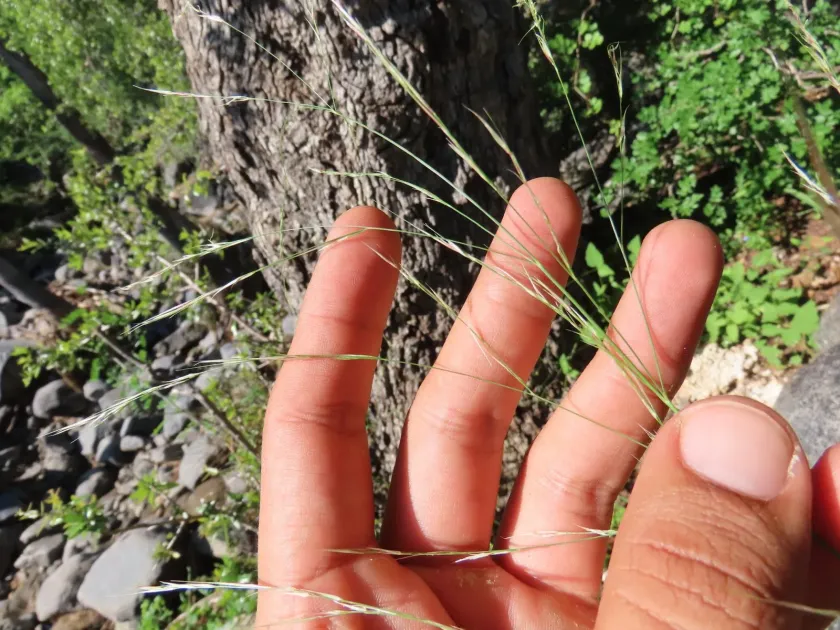
Description
Growing requirements
Aristida ternipes, commonly known as spider grass, is a perennial grass species belonging to the Poaceae family. This resilient plant is well-adapted to survive in arid and semi-arid environments, making it a critical component of grassland ecosystems.
The native range of this species extends across the Americas, where it is found thriving in poor, sandy, and stony soils. Its ability to tolerate low soil fertility allows it to colonize lands that are generally unsuitable for traditional agricultural crops.
Botanically, Aristida ternipes is distinguished by its fibrous root system and narrow, xerophytic leaves. The inflorescence consists of panicles with long, spreading awns that are characteristic of the Aristida genus, facilitating efficient seed dispersal by wind.
The plant has specific environmental requirements, primarily needing full solar radiation and high temperatures to reach maturity. It performs exceptionally well in regions with distinct dry seasons, as it enters a dormant phase to conserve energy when moisture is unavailable.
Economically, this grass serves as a vital forage source for livestock, particularly in areas where more nutritious but less hardy grasses fail. While its palatability decreases with maturity, it remains a reliable source of dry matter during periods of extreme drought.
Main diseases and pests
Due to its evolution in harsh climates, Aristida ternipes possesses a robust natural defense mechanism against most common agricultural pathogens. It rarely suffers from widespread outbreaks compared to domesticated cereals or forage species.
The most frequent threats are related to fungal infections triggered by unseasonably wet conditions. Root rot and foliage spots can occur if the plant is forced to grow in waterlogged or poorly drained soils for extended periods.
Insect pests such as grasshoppers and various hemipterans can cause physical damage to the leaves and developing seeds. While these infestations rarely destroy the stand, they can significantly reduce the biomass yield available for grazing.
Management of pests in Aristida ternipes stands relies heavily on maintaining healthy plant vigor. Overgrazing is a significant risk factor, as it stresses the plant, reduces root depth, and creates microclimates favorable for pest proliferation.
Proper pasture rotation is the primary strategy for minimizing threats. By allowing the plant to recover and establish strong root systems, farmers can ensure long-term sustainability and resistance to both disease and environmental stress.