
Aristida stricta
Aristida stricta
Description
Sowing dates
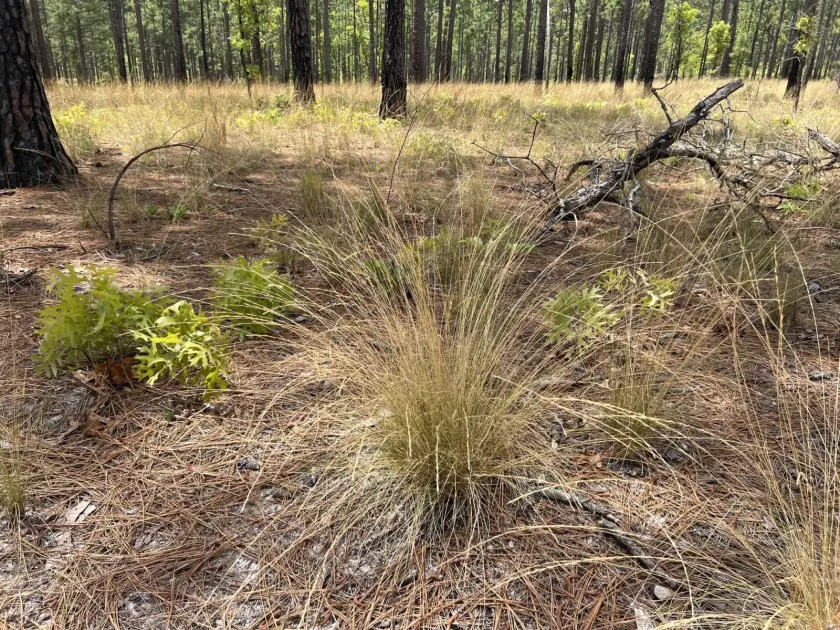
Aristida stricta, commonly known as wiregrass, is a perennial bunchgrass belonging to the Poaceae family. It is recognized for its dense, wire-like leaf clusters and its significant role in fire-dependent ecosystems where it acts as a primary ground cover.
For establishing stands, seeds should be sown in the spring when soil temperatures reach stable levels. The seeds are small, necessitating a shallow planting depth of approximately 0.5 to 1 centimeter to ensure they have enough energy to reach the surface while maintaining moisture contact.
Seedbed preparation is crucial; the soil must be cleared of competing weeds to prevent shading, which the species does not tolerate in its early stages of growth. Mechanical packing after sowing ensures that the soil and seeds are in close contact, significantly improving germination rates.
The plant exhibits moderate germination speed but rapidly establishes its root system once the first true leaves emerge. Given its nature as a bunchgrass, spacing should allow for the expansion of individual clumps as the plant matures over several seasons.
Optimal sowing occurs when the risk of late frosts has passed, allowing the plants to take full advantage of the warming period to accumulate biomass before the onset of the peak summer heat.
Growing requirements
Aristida stricta is a hardy xerophyte, natively adapted to sandy, nutrient-poor, and highly acidic soils where many other grass species would fail to survive. Its root system is exceptionally efficient at extracting minerals from degraded substrates.
The species requires excellent drainage, as it is highly susceptible to root rot in saturated or poorly aerated soil conditions. It thrives in open landscapes that receive direct, unfiltered sunlight throughout the day.
Climate-wise, it prefers regions with warm, long growing seasons. It is remarkably drought-tolerant, making it an ideal candidate for projects in arid or semi-arid environments where supplemental irrigation is unavailable or impractical.
Light levels are the primary determinant of its productivity. Aristida stricta cannot compete with taller vegetation, which makes regular management, such as controlled burning or thinning, essential to maintain its dominance in an ecosystem.
While the plant requires minimal fertilization, providing low-level nitrogen supplementation in the initial growth phase can help in achieving a more robust stand, which is particularly beneficial when the plant is used for land reclamation.
Yield
In agricultural settings, Aristida stricta is rarely used as a primary fodder crop due to the high silica content and stiffness of its leaves. However, it can provide limited grazing potential for livestock during the very early stages of vegetative growth.
Its primary value lies in land management and soil conservation. It is widely recognized for its ability to stabilize loose, sandy soils prone to wind erosion and is a key component in the restoration of disturbed habitats.
While biomass yield is not comparable to intensive forage crops, its persistence and low-maintenance nature provide a consistent ecological yield in terms of carbon sequestration and soil stabilization over several years.
The structural characteristics of the plant allow it to be harvested as a source of high-fiber material. This byproduct can be utilized in agricultural applications where a tough, durable, and naturally resistant organic material is required.
To ensure sustainable yield, management practices should focus on maintaining a healthy plant density and preventing the accumulation of dead plant matter, which can otherwise impede new growth and increase fire risk.
Main diseases and pests
Aristida stricta is highly resistant to common agricultural diseases thanks to its tough, lignified foliage. The physical structure of the plant acts as a natural deterrent against many generalist leaf-eating insects.
The main biological threats include subterranean pests, such as grubs and wireworms, which may target the roots during the seedling stage. These pests can cause significant damage in areas previously used for other intensive cropping systems.
Occasional fungal outbreaks, such as rust, may occur if the stand is allowed to become too dense in high-humidity conditions. Proper aeration and maintenance of open, sunny patches within the stand are usually sufficient to prevent severe outbreaks.
Invasive species represent the most significant threat to Aristida stands. Once more competitive weeds or shrubs shade the plant, it rapidly declines, losing its vigor and eventually disappearing from the site.
Integrated management, including timely intervention and avoiding overgrazing, remains the best strategy for keeping the population healthy and preventing the encroachment of undesirable vegetation.
Harvesting
Harvesting is generally performed during the heading stage, when the plant has achieved maximum biomass but before the stalks become excessively lignified and difficult to process with standard equipment.
If the goal is to harvest the plant as a durable fiber source, producers often wait until the stalks have reached full maturity, at which point the plant has achieved its maximum structural strength.
Cutting height is a critical parameter; the blades should be set high enough to preserve the basal meristem, allowing the plant to recover and produce regrowth during the following season without unnecessary stress.
Due to the naturally low moisture content of the stalks, the cut material dries quickly in the field. This efficiency reduces the time required for post-harvest processing and decreases the risk of storage-related fungal or mold contamination.
Proper storage is required to ensure the long-term utility of the harvested biomass. The material should be kept in a dry, well-ventilated location to prevent any moisture buildup that could lead to structural degradation.