
Purple three-awn
Aristida purpurea
Description
Growing requirements
Purple three-awn (Aristida purpurea) is a perennial grass belonging to the Poaceae family. It is native to North America, where it thrives in diverse environments ranging from arid prairies to semi-desert regions across the United States and Mexico.
This species is highly regarded for its exceptional drought tolerance, making it an essential component of rangelands in arid climates. It effectively stabilizes sandy or rocky soils, preventing wind erosion and protecting vulnerable landscapes from degradation.
The plant requires well-drained soils and thrives in conditions where moisture availability is limited. It is particularly well-adapted to neutral or alkaline soil conditions and performs poorly in heavy, waterlogged clays or areas with high humidity levels.
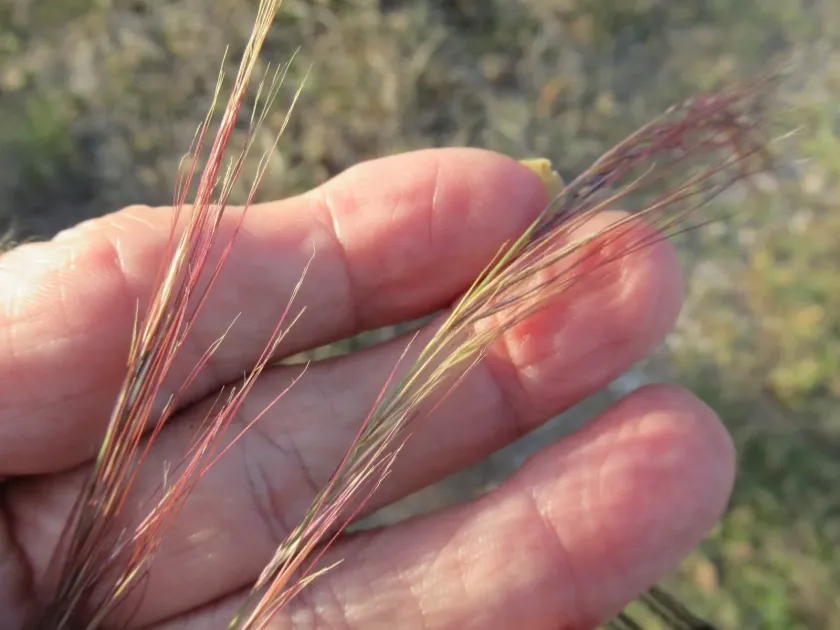
Botanically, it forms dense tufts or bunches of fine, wire-like leaves. Its most distinctive feature is the flowering culm, which bears purplish awns that give the plant its common name. The root system is deep and fibrous, designed for maximum water uptake.
In agricultural practice, purple three-awn is primarily used for light grazing during the early growth stages. It is also an important species for ecological restoration projects, as it recovers quickly after disturbances and does not require intensive fertilization.
Main diseases and pests
The primary threats to Aristida purpurea include root rot diseases triggered by excessive soil moisture and poor drainage. Additionally, invasive non-native plant species can outcompete young seedlings, hindering the establishment of a healthy stand.