
Aristida mutabilis
Aristida mutabilis
Description
Growing requirements
Aristida mutabilis is an annual grass belonging to the Poaceae family, recognized for its exceptional adaptation to arid and semi-arid environments. Primarily found in Africa and parts of Western Asia, this species plays a vital role in desert ecosystems by providing ground cover and fodder.
The plant exhibits high drought tolerance, allowing it to complete its growth cycle during short rainy seasons. Its physiological mechanisms enable it to survive in environments where precipitation is erratic and water scarcity is a constant factor for plant development.
Regarding soil requirements, Aristida mutabilis thrives in sandy, well-drained soils. It is particularly well-adapted to nutrient-poor soils where other grasses struggle to establish, making it a key candidate for land restoration projects in degraded areas.
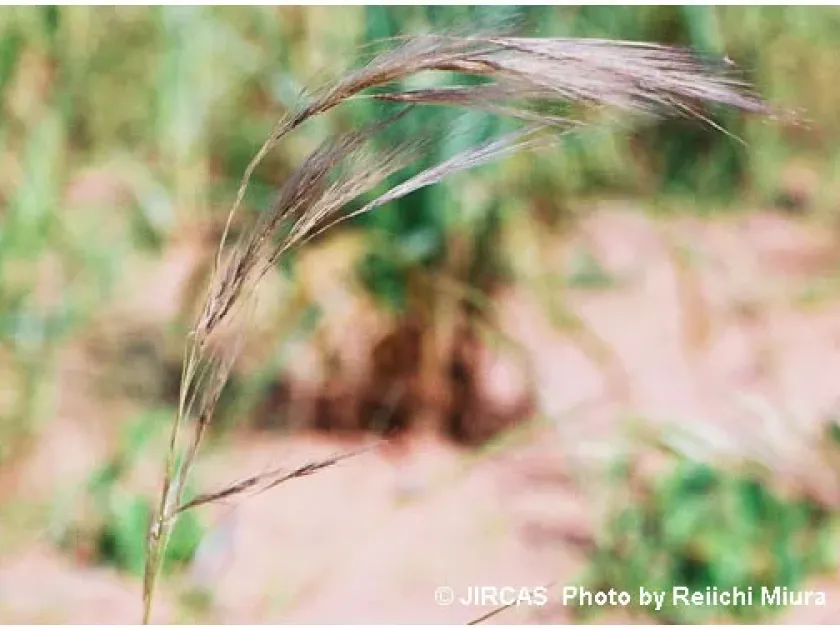
Botanically, it is a tufted grass with narrow, often inrolled leaves that minimize water loss through transpiration. The inflorescence is a panicle characterized by long awns, which facilitate seed dispersal by sticking to animal coats or being carried by wind.
In terms of economic utility, this species is mainly utilized for grazing livestock such as camels, sheep, and goats. While its nutritional value is lower than that of cultivated grasses, its ability to produce biomass under extreme conditions provides a critical buffer during forage shortages.
Main diseases and pests
The primary threats to Aristida mutabilis include fungal pathogens, particularly rusts and smuts, which can flourish under specific climatic conditions. These infections can lead to chlorosis and significantly reduce the photosynthetic capacity of the plants.
Insect pests, notably locusts and grasshoppers, represent a severe threat to wild stands of this grass. Rapid, large-scale defoliation by these insects can destroy entire populations, disrupting the localized food chain and forage supply for pastoralists.
Soil-borne pests such as grubs can cause significant damage by feeding on the root systems of young plants, leading to wilting and mortality, especially in periods of low water availability.
Invasive species also pose a threat by competing for limited soil nutrients and moisture. In some degraded landscapes, these aggressive weeds can outcompete Aristida, leading to a decline in biodiversity and ecosystem stability.
Overgrazing remains the most significant human-induced threat. Continuous intensive grazing prevents the plants from reaching the seed-setting stage, which gradually diminishes the soil seed bank and leads to a long-term reduction in forage availability.