
Aristida longespica
Aristida longespica
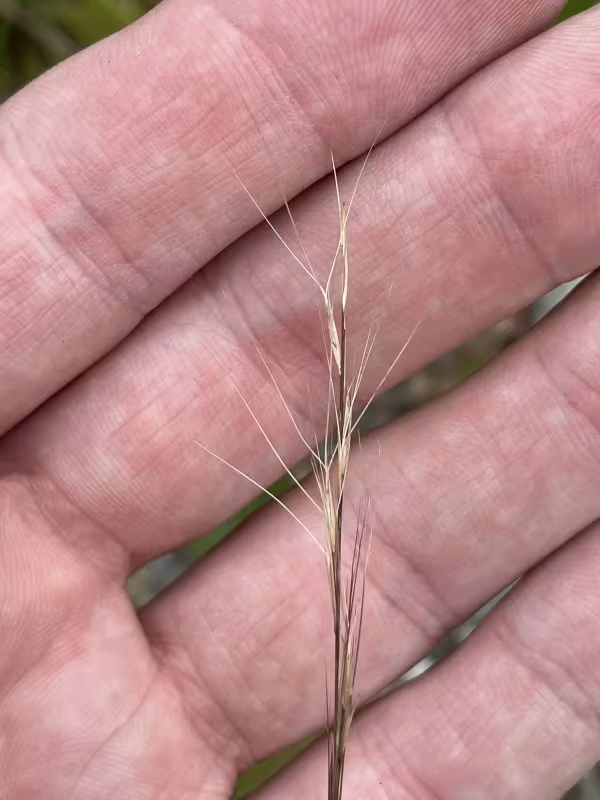
Description
Growing requirements
Aristida longespica is a species of grass known by the common name slimspike three-awn, belonging to the Poaceae family. It is native to various regions of North America.
This grass thrives primarily in sandy soils, dry meadows, and disturbed sites where other vegetation might struggle to survive due to poor nutrient conditions.
Botanically, it is recognized by its slender culms and long, three-parted awns that extend from the spikelets, which facilitate seed dispersal via wind and animals.
The species is exceptionally drought-tolerant and requires full sun exposure to flourish, as it does not adapt well to shaded or waterlogged environmental conditions.
In terms of management, its deep root system allows it to persist in arid environments, making it a pioneer species on abandoned agricultural land.
Main diseases and pests
The primary concern regarding this plant in agricultural settings is the sharp awns, which can cause significant irritation and physical injury to livestock.
The plant is not generally prone to typical cereal diseases, as it possesses inherent evolutionary resistance to common plant pathogens in its native habitat.
Insect pests, such as grasshoppers, are the most frequent threat to the foliage, consuming the leaves during the peak of the growing season.
From an agronomic perspective, it is often classified as a nuisance weed because it competes with more palatable and nutritious forage grasses.
Control methods typically involve mechanical removal or herbicide application if the population becomes too dense and compromises the grazing value of the area.