
Feather-top wiregrass
Aristida latifolia
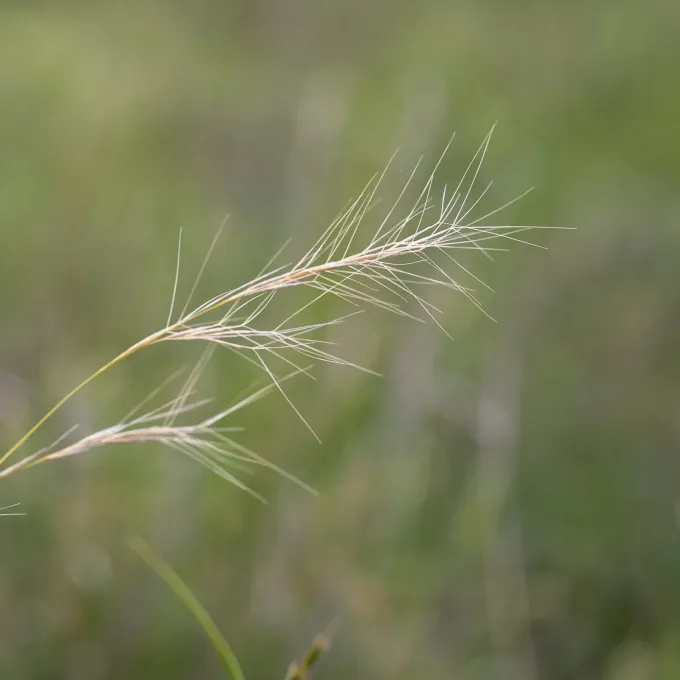
Description
Growing requirements
Feather-top wiregrass (Aristida latifolia) is a robust perennial grass species belonging to the Poaceae family. It is highly regarded for its ability to thrive in arid and semi-arid environments where other forage species often fail to survive.
The plant is native to the diverse landscapes of Australia. It primarily colonizes heavy clay soils, which are known for their moisture-retention properties, allowing the grass to sustain growth even during extended dry spells characteristic of its native habitat.
Botanically, this species is characterized by its deep root system and tough, narrow leaves designed to limit transpiration. The plant exhibits a unique ability to enter dormancy during extreme droughts, which protects its vital crown tissues from desiccation.
The cultivation requirements for Aristida latifolia include full sun exposure. It is a heliophytic plant that requires open space to minimize competition for light and nutrients. Inadequate light levels significantly reduce both the tillering capacity and the biomass yield.
Agronomic management relies on rotational grazing practices. Because this grass has a slower recovery rate compared to improved pasture grasses, it should be managed with adequate rest periods to allow for regrowth and seed bank replenishment.
Main diseases and pests
One of the primary advantages of feather-top wiregrass in an agricultural context is its natural resistance to many common insect pests. The silica-rich leaves and stems make the tissue physically difficult to consume for many generalist herbivores.
However, fungal pathogens such as leaf rust and powdery mildew can become a concern during unseasonably wet seasons or in poorly managed fields with excessive crop density. Good ventilation within the crop canopy is essential for prevention.
Locust swarms pose a major threat to this species, especially in interior arid regions. During peak infestation years, these pests can strip the entire canopy, leading to a temporary collapse of the local pasture productivity.
Root-knot nematodes can interfere with nutrient uptake, particularly in monoculture systems where the soil biome has been depleted. This leads to stunted growth patterns and reduced vigor in the spring season.
Fire risk represents the most significant physical threat to managed stands. The accumulation of high levels of dry, carbonaceous matter makes the grass susceptible to ignition, necessitating careful fuel load management around cultivated sites.