
Woolly three-awn
Aristida lanosa
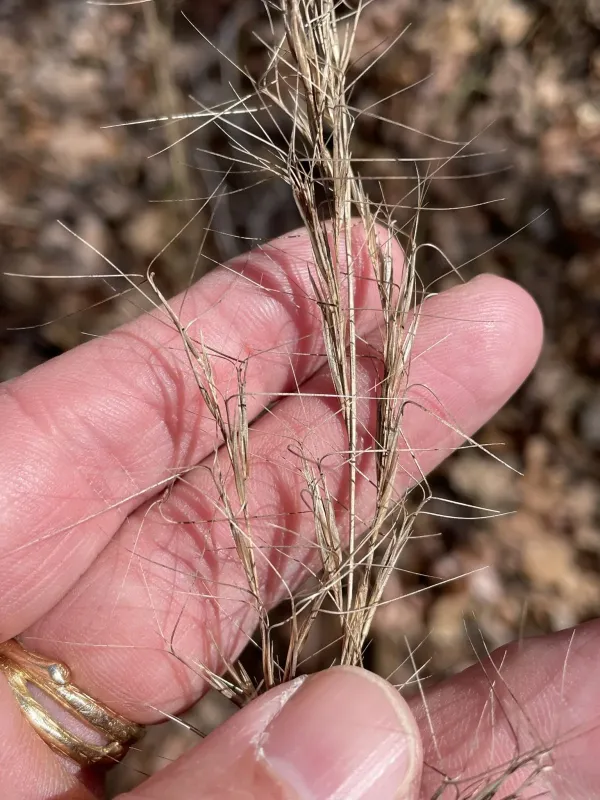
Description
Growing requirements
Woolly three-awn (Aristida lanosa) is a perennial grass species within the Poaceae family, primarily native to the sandy regions of North America. This grass is well-adapted to harsh environments, functioning effectively as a stabilizer for sandy soils and nutrient-poor terrain.
The plant is botanically distinguished by its woolly or hairy stems and narrow, blade-like leaves that are highly adapted to low-water conditions. These features reduce water loss through transpiration, making the grass a reliable survivor in extreme arid landscapes.
Regarding soil requirements, Aristida lanosa thrives in well-drained, sandy, and infertile substrates. It has an extreme intolerance for saturated soils and waterlogging, which often leads to root rot and diminished vigor, emphasizing the importance of site selection in agriculture.
The species prefers full sunlight and high-temperature environments. It is a warm-season grass, meaning its active growth phase aligns with the warmest months of the year. This physiological trait allows it to remain productive when cool-season grasses typically go dormant.
In practical use, this grass is predominantly utilized for land reclamation and erosion control. While its high lignin content makes it less palatable to livestock as it matures, it remains a valuable component in managing drought-prone landscapes and restoring disturbed vegetation covers.
Main diseases and pests
Aristida lanosa exhibits a high level of natural resilience to common agricultural diseases. Its preference for open, dry habitats naturally limits the proliferation of most moisture-dependent fungal pathogens such as downy mildew or various rusts that plague traditional crops.
However, pests such as grasshoppers and other orthopterans can occasionally pose a threat. These insects can consume significant portions of the foliage during intense drought years when other, more palatable green forage options are limited in the surrounding landscape.
While chemical pest management is rarely warranted, maintaining a healthy density of the stand is crucial. Weed competition is often the greatest threat to seedling establishment, as the slow growth rate of woolly three-awn makes it difficult for the plant to compete with invasive weeds.
Proper grazing management is essential for preventing the degradation of the plant stand. Over-utilization during the early growth stages forces the plant to deplete its root reserves, which significantly increases its susceptibility to environmental stressors and opportunistic pathogens.
Overall, the agronomic management of this species focuses on minimal intervention. Promoting natural ecological health through controlled disturbance and rotational practices is more effective than standard intensive disease or pest control methods applied to common forage crops.