
Aristida inaequiglumis
Aristida inaequiglumis
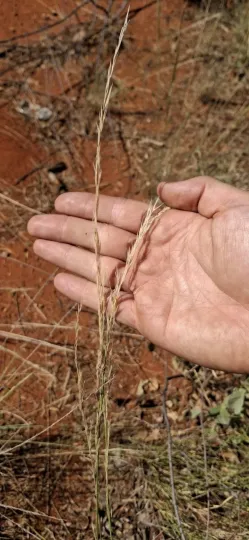
Description
Sowing dates
Aristida inaequiglumis is a hardy grass species primarily propagated during the onset of the rainy season. Successful establishment depends on synchronizing sowing with the first reliable rainfall to ensure the seeds have sufficient moisture to germinate in arid environments.
Seedbed preparation involves minimal soil disturbance, as the plant is adapted to sandy or degraded soils. Seeds should be sown shallowly, ideally at a depth of 1 to 2 centimeters, to allow for optimal seedling emergence while maintaining seed-to-soil contact.
In large-scale restoration or pasture projects, broadcasting seeds followed by light rolling is the preferred method. This technique mimics natural seed dispersal while protecting the seeds from being blown away by strong winds common in its native range.
During the first few weeks after sowing, the plants are highly vulnerable to weed competition. Effective field management requires removing invasive weeds to ensure the young Aristida plants can develop their root systems without resource limitation.
Proper seed storage is essential, as the seeds have specialized appendages that can cause them to tangle. Using high-quality, cleaned seeds significantly improves germination rates and ensures a more uniform stand development across the field.
Growing requirements
As a member of the Poaceae family, Aristida inaequiglumis is exceptionally well-adapted to extreme heat and prolonged dry spells. It is a true xerophyte, thriving in environments where other forage species fail due to insufficient water availability.
The plant performs best on well-drained, sandy, or gravelly soils. It does not tolerate waterlogging, meaning sites with heavy clay or poor drainage are unsuitable for cultivation, as these conditions rapidly lead to root rot and plant mortality.
Climatic requirements are centered on high solar radiation and high temperatures, often exceeding 30-35 degrees Celsius. The species utilizes efficient photosynthetic pathways to maintain growth during the hottest parts of the growing season.
Nutrient requirements are relatively low, as the plant is evolved to extract minerals from nutrient-poor substrates. Over-fertilization, especially with nitrogen, can negatively impact the plant’s drought tolerance and structural integrity.
Consistent management of stocking rates is the most critical environmental requirement when the plant is used for grazing. Protecting the plant’s growth nodes through rotational grazing cycles helps ensure long-term persistence in the landscape.
Yield
The agricultural use of Aristida inaequiglumis is primarily oriented towards extensive livestock production in arid and semi-arid regions. It provides a reliable source of forage when more palatable grasses have already withered.
Yield is highly variable and depends largely on the distribution of seasonal rainfall. In years with adequate precipitation, the plant can produce significant biomass, though its palatability decreases as the stems lignify toward the end of the season.
Seed harvesting is challenging due to the asynchronous ripening and the shattering nature of the panicles. Consequently, specialized harvesting equipment or hand-gathering methods are necessary to secure viable yields for future propagation.
To maximize forage output, it is important to harvest or graze the grass during its peak vegetative phase. Once the plant enters the reproductive stage, the increase in fiber content reduces its nutritional value for cattle and small ruminants.
Integrating legume species into Aristida stands can enhance overall yield by improving nitrogen availability in the soil. This synergy helps sustain the productivity of the grass component even during drier-than-average seasons.
Main diseases and pests
Aristida inaequiglumis has a robust resistance to most common crop diseases. However, in unusually humid conditions, fungal leaf spots may occur, though these rarely reach levels that require chemical intervention.
The main pests affecting the crop include various species of grasshoppers and locusts that can strip foliage rapidly during peak outbreaks. Monitoring programs are essential to detect and manage these pest populations before they cause widespread damage.
Improper grazing management is the primary threat to the longevity of the stand. Overgrazing weakens the plant’s root system, leading to soil erosion and the encroachment of undesirable, less nutritious weed species.
Fungal issues in the root zone are almost exclusively related to poor soil drainage. Ensuring that the site is well-aerated is the most effective preventative measure against disease in this species.
Biological pest control is preferred over synthetic pesticides, as Aristida is typically cultivated in sensitive ecological zones where maintaining biodiversity and chemical-free environments is a priority for sustainable land management.