
Aristida hygrometrica
Aristida hygrometrica
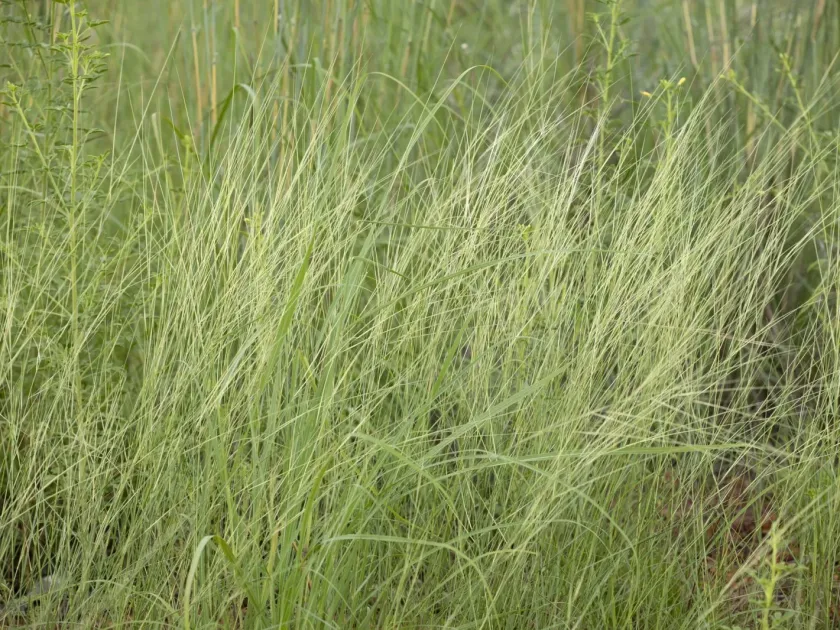
Description
Sowing dates
Aristida hygrometrica is an annual grass species whose life cycle is intricately linked to seasonal rainfall patterns. In its native environment, germination is triggered immediately by the onset of monsoon rains, allowing the plant to complete its life cycle during the short wet season.
For agricultural purposes, the optimal sowing time is just before the expected onset of the rainy season. This allows the seeds to benefit from the initial moisture boost necessary to penetrate the soil and establish a root system effectively.
The seeds of this species feature a unique hygroscopic mechanism: long awns that twist and untwist with changes in humidity. This natural process acts as a drill, enabling the seed to bury itself into the soil, which is essential for survival in harsh, arid landscapes.
Proper seed-to-soil contact is critical during sowing. Surface broadcasting followed by light harrowing is often sufficient, as the natural movement of the awns will assist the seeds in finding the appropriate depth for germination.
Ensuring adequate moisture in the first two weeks post-germination is vital. Once the root system is established, the plant exhibits impressive resilience, rapidly producing foliage as it transitions into the vegetative growth phase.
Growing requirements
As a member of the Poaceae family, Aristida hygrometrica is highly adapted to the arid and semi-arid regions of Australia. It is classified as a xerophytic plant, capable of thriving in environments where water is scarce and temperatures are extremely high.
This grass prefers well-drained sandy or loamy soils. It cannot tolerate waterlogging, which often leads to root rot and other fungal diseases. The soil structure should allow for rapid drainage to maintain optimal oxygen levels in the rhizosphere.
Aristida hygrometrica requires full sun exposure and is highly intolerant of shade. In experimental cultivation settings, competition from taller weed species must be strictly controlled to prevent growth suppression and ensure the plant receives maximum irradiance.
The ideal temperature range for its development is between 25°C and 35°C. The species is highly adapted to significant diurnal temperature fluctuations, often experiencing intense heat during the day and cooler conditions at night.
Nutrient requirements are generally low, as the plant is evolved to extract resources from nutrient-poor soils. However, in low-fertility areas, moderate nitrogen fertilization at the early stage can significantly enhance the production of biomass.
Main diseases and pests
The primary threats to Aristida hygrometrica include various fungal pathogens that flourish during periods of unseasonable high humidity. These infections can compromise the structural integrity of the stems and reduce overall forage quality.
Insect pests, particularly orthopterans such as grasshoppers, are known to feed heavily on the succulent leaves of the plant. Field monitoring for insect populations is essential, especially during the early vegetative stage of development.
Poor management practices, such as excessive irrigation, pose a significant risk. Over-watering creates an environment favorable for root-rotting organisms, which can lead to rapid crop failure, especially in clay-heavy soil substrates.
Competition from invasive plant species is another critical factor. Because Aristida hygrometrica is relatively slow to establish compared to some aggressive weeds, early intervention with mechanical weeding is recommended to protect the crop.
External physical damage, whether from intense storms or animal grazing, can also create openings for secondary infections. Maintaining a healthy, well-nourished population helps the plants recover more quickly from environmental or mechanical stressors.
Harvesting
In a practical agricultural context, Aristida hygrometrica is primarily utilized as a forage resource for livestock grazing. It serves as a valuable source of feed in semi-arid rangelands where few other grasses can maintain productivity.
Harvesting seeds for future use requires caution due to the sharp, rigid awns that characterize the species. These awns can cause physical harm to humans and damage machinery; therefore, harvesting is typically conducted at the stage of physiological maturity before the awns fully harden.
Post-harvest, the seeds must be thoroughly dried to reduce moisture content to below 12% for safe long-term storage. Using a cool, dry, and rodent-proof facility ensures that the viability of the seed remains high for the next season.
When harvested as hay, the material should be chopped or ground. The rigid nature of the stems makes them potentially harmful to the digestive tracks of livestock if consumed in large, unprocessed quantities.
The plant is most effectively used in mixed-pasture systems designed for land rehabilitation. Its ability to colonize degraded soils and grow quickly during the rainy season makes it an excellent choice for restoring vegetation in arid agricultural regions.