
Aristida hordeacea
Aristida hordeacea
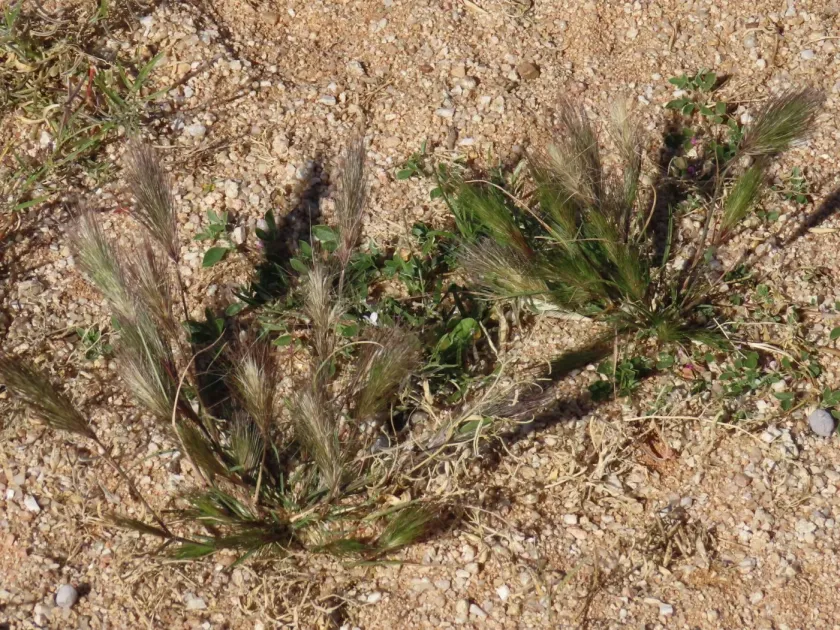
Description
Growing requirements
Aristida hordeacea is a perennial grass species belonging to the Poaceae family. It is known for its remarkable resilience and ability to thrive in harsh environments, making it a key component of the arid grasslands in its native African range.
The plant is biologically characterized by its dense, tufted growth habit and inflorescences with long, barley-like awns. This specific structure helps the plant manage seed dispersal and protection in extreme wind and dry heat conditions.
Regarding soil requirements, Aristida hordeacea performs best in sandy or gravelly soil types with low moisture retention. It is highly adapted to nutrient-poor substrates, where it successfully competes with other vegetation by maximizing root depth.
The climatic preferences of this species include high solar irradiance and significant thermal ranges. It is an obligate heliophyte, meaning it requires full sun exposure to reach its physiological potential and produce fertile seeds during the growing season.
In terms of agricultural use, it serves primarily as a forage resource for nomadic livestock. While it is less palatable once mature, it provides vital bulk biomass during the early growth stages in regions where conventional crops struggle to establish.
Main diseases and pests
This grass species shows a high degree of natural resistance to common fungal pathogens and rusts that typically affect cultivated cereals. Its physiological defense mechanisms are highly evolved to withstand the dry climate of the African savannas.
Insect pests such as grasshoppers and locusts are the primary biological threats. However, given its natural habitat, the plant usually survives these infestations through rapid regrowth capabilities, assuming the grazing pressure is managed sustainably.