
Hook three-awn
Aristida hamulosa
Description
Growing requirements
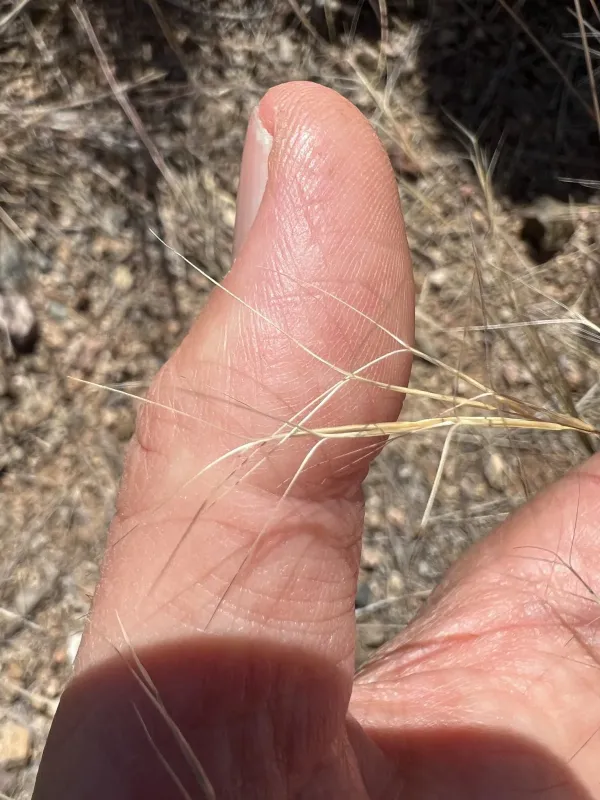
Aristida hamulosa, commonly known as hook three-awn, is a perennial grass belonging to the Poaceae family. It is native to the arid and semi-arid regions of North America, particularly prevalent in southwestern United States and Mexico.
Botanically, it is characterized by its stiff leaves and distinctive three-awned florets. These adaptations are evolutionary responses to dry environments, allowing the plant to survive in nutrient-poor, sandy, or rocky soils where moisture availability is highly unpredictable.
The plant thrives under full sun exposure and requires minimal annual rainfall to maintain its growth cycles. It is highly adapted to high-temperature regimes and exhibits significant metabolic efficiency during periods of prolonged drought.
Regarding agricultural practices, it is rarely cultivated as a row crop but is managed as a critical component of rangeland ecosystems. Proper land management involves ensuring that the grass is not overgrazed, allowing it to complete its reproductive cycle.
Hook three-awn serves as an essential source of forage for livestock during dry seasons. Its ability to remain palatable and nutritious when other pasture species have dried out makes it a valuable asset for ranching operations in arid climates.
Main diseases and pests
Fungal diseases, specifically rusts and leaf spots, can affect the plant if high humidity persists for extended periods. These pathogens compromise the biomass quality and can reduce the overall health of the rangeland if not monitored.
Grasshoppers and other orthopteran insects are the primary pests that damage the canopy. These insects can cause localized outbreaks that decimate the grass stands, necessitating careful stocking density management.
Overgrazing remains the single most significant threat to Aristida hamulosa populations. Excessive livestock pressure prevents the plant from storing enough energy in its root system to regenerate during the following season.
- Monitor insect populations during early summer.
- Avoid grazing during peak flowering periods.
- Ensure natural soil aeration to prevent root rot.
Effective management requires a balance between livestock utilization and allowing the plant to reseed, ensuring the long-term sustainability of the pasture vegetation.