
Aristida funiculata
Aristida funiculata
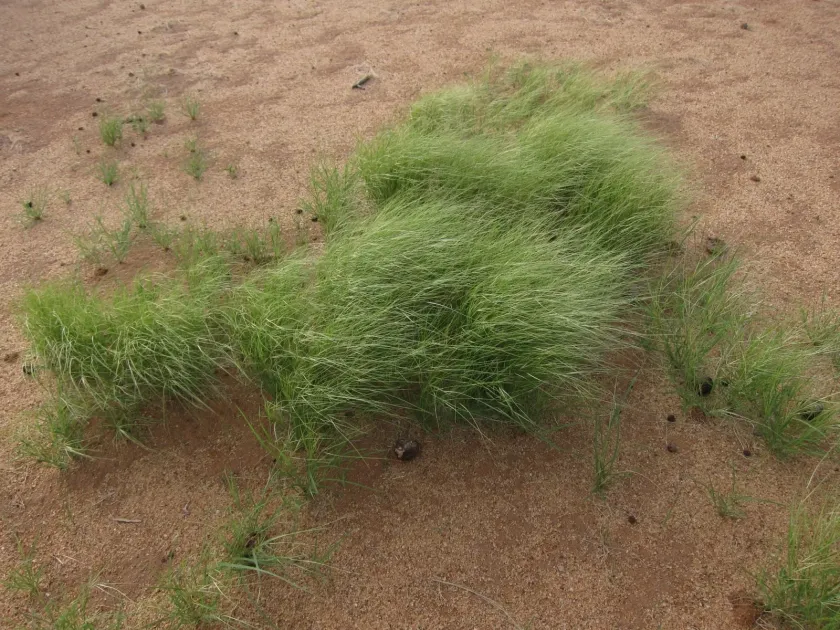
Description
Growing requirements
Aristida funiculata is a species of grass in the family Poaceae. It is native to arid and semi-arid environments across Africa and parts of South Asia, acting as a pioneer species in harsh soils.
This annual grass is highly adapted to extreme water scarcity. Its ability to complete its lifecycle during short rainfall periods makes it a resilient component of desert and savanna vegetation.
The plant thrives in sandy, stony, or impoverished soils where more demanding forage crops would fail. It requires high solar radiation and excellent soil drainage for optimal development.
Botanically, it is recognized by its distinctively long, twisting awns attached to the glumes. These structures are evolutionary adaptations that facilitate seed dispersal through wind and animal transport.
As a xerophytic plant, it exhibits structural adaptations such as rolled leaves and dense tissue to reduce transpiration, ensuring survival during intense heat and prolonged drought spells.
Harvesting
The primary agricultural use of Aristida funiculata is as forage for livestock, particularly goats, sheep, and camels. It serves as a vital natural pasture resource in dry regions.
Farmers must exercise caution during grazing management. Once the plant matures, the sharp awns can become problematic, potentially causing physical harm to the mouths and hides of grazing animals.
Beyond its feed value, the grass is utilized in land restoration programs. Its root network plays a critical role in anchoring loose sandy soils, thereby mitigating wind erosion in desertified areas.
The nutritional profile of the grass is highest during the early vegetative stage. As the plant enters the reproductive phase, the biomass becomes fibrous and significantly less palatable to cattle.
Sustainable exploitation involves allowing the plants to set seeds at the end of the season to ensure natural reseeding for the subsequent year, maintaining the balance of the local ecosystem.