
Aristida divaricata
Aristida divaricata
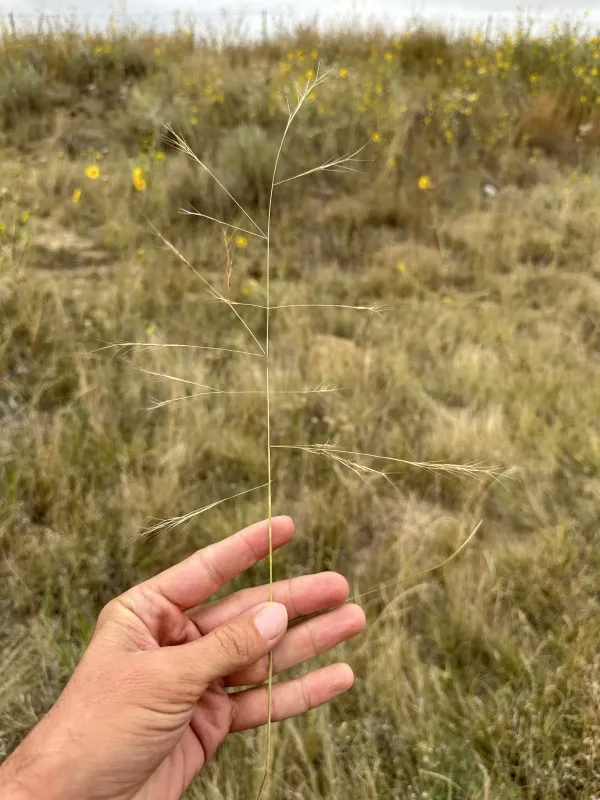
Description
Sowing dates
Aristida divaricata is a perennial grass species typically established through seed sowing. The optimal sowing time is early spring, once soil temperatures remain consistently above 15 degrees Celsius.
Seed depth is critical for this species; seeds should be sown at a shallow depth of approximately 1 to 2 centimeters to ensure successful germination and emergence.
A row spacing of 30 centimeters is generally recommended to allow sufficient space for root development and nutrient uptake between plants.
Post-seeding compaction of the soil is highly beneficial, as it ensures close contact between the soil and seeds, facilitating moisture absorption in arid conditions.
The seedling stage requires careful management, including weed control and consistent moisture, to establish a robust stand before the onset of summer heat.
Growing requirements
Belonging to the Poaceae family, Aristida divaricata is a drought-tolerant grass adapted to semi-arid environments and challenging soil conditions.
The species thrives in well-drained sandy or loamy soils. It does not tolerate waterlogging, which can quickly lead to root rot and plant decay.
High solar radiation is essential for the plant, as it is an obligate sun-loving species that requires full exposure to maximize its biomass production.
It is well-adapted to wide temperature fluctuations and can survive intense seasonal droughts that would cause other forage species to perish.
Nutrient requirements are relatively low compared to intensive forage crops, allowing the grass to maintain productivity in soil conditions that are marginal for other plants.
Main diseases and pests
Rust diseases are the primary fungal threats to this grass, particularly in humid microclimates where air circulation is restricted within the canopy.
Insect pests such as grass aphids and certain types of grasshoppers can cause significant damage by feeding on stems and developing seed heads.
Overgrazing poses a major threat, as frequent defoliation prevents the plant from replenishing its root reserves, leading to a decline in stand vigor over time.
Competitive pressure from aggressive invasive weeds can suppress the growth of young Aristida plants during the establishment phase.
Effective management strategies include rotational grazing and periodic rest periods to allow the plants to recover and undergo a full growth cycle.