
Kerosene grass
Aristida contorta
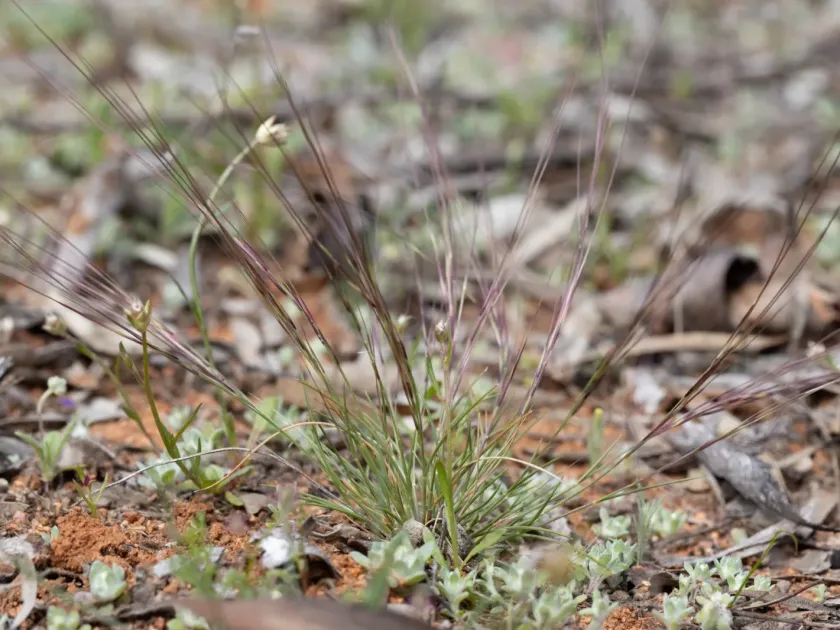
Description
Growing requirements
Kerosene grass (Aristida contorta) is a perennial grass species belonging to the Poaceae family. It is native to the arid and semi-arid regions of Australia, where it serves as a critical component of the local vegetation landscape.
The plant thrives in sandy and light-textured soils that are typically low in nitrogen and phosphorus. Its ability to tolerate extreme moisture deficits allows it to colonize environments where most conventional agricultural crops would fail.
Botanically, it is identified by its compact habit and distinctive twisted awns on its spikelets. These awns assist in seed burial and dispersal, which is an evolutionary adaptation to the harsh, windy conditions of the Australian outback.
In terms of climatic requirements, it is highly adapted to high temperatures and sporadic rainfall. It possesses the capability to enter dormancy during prolonged droughts and rapidly resumes metabolic activity following light rain events.
Its primary agricultural utility is as an extensive forage source. Although the foliage can become unpalatable and abrasive due to the sharp awns as the plant matures, young growth is frequently grazed by livestock, including sheep and cattle.
Main diseases and pests
The most significant concern regarding Aristida contorta in agricultural settings involves its mechanical impact on livestock. The sharp, twisted awns can penetrate the skin, fleece, and eyes of grazing animals, leading to welfare issues and reduced animal productivity.
Pathological threats are relatively minor given the plant's natural habitat. Occasionally, fungal pathogens such as leaf rust can occur if atypical, sustained wet weather impacts the region, though these outbreaks are generally localized.
Insect pests include specialized phytophagous invertebrates that coexist with the plant in its native ecosystem. These insects rarely reach population densities that necessitate chemical control, making the grass a low-maintenance species in rangeland management.
The ecological integrity of Kerosene grass stands is threatened by overgrazing and the encroachment of invasive weed species. When the soil is disturbed, the grass struggles to compete, leading to a decrease in its density over time.
Management strategies for this species prioritize controlled grazing intervals. By allowing the plants to seed and replenish their carbohydrate stores, landowners can maintain productive stands for long-term use in arid zone grazing systems.