
Aristida congesta
Aristida congesta
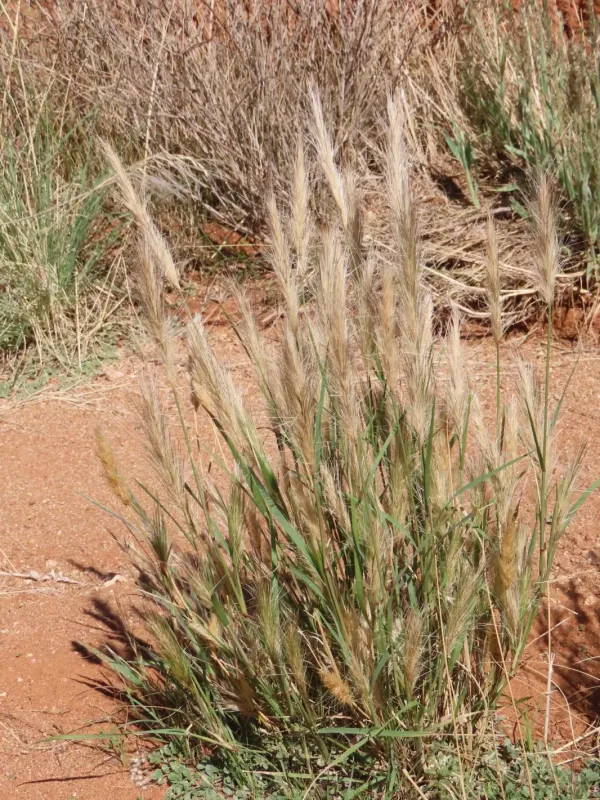
Description
Growing requirements
Aristida congesta, commonly known as a type of cat's tail grass, is a perennial plant belonging to the Poaceae family. It is indigenous to the southern regions of Africa and is well-adapted to harsh, arid environments.
This grass species is characterized by its ability to thrive in poor, sandy, and gravelly soils where moisture availability is limited. It forms dense, tufted clusters that help stabilize the soil surface and prevent erosion.
Botanically, it features narrow, often inrolled leaves and distinct, congested panicles that give the plant its characteristic appearance. It typically reaches a height of up to 60 cm, depending on the specific environmental conditions and rainfall patterns.
The climatic requirements for Aristida congesta involve high temperatures and intermittent rainfall, as it is a drought-tolerant species that enters a state of dormancy during extreme dry seasons.
In agricultural settings, it serves as an important source of grazing material for livestock. While not as nutrient-dense as cultivated grasses, its resilience makes it a vital component of rangelands in semi-arid zones.
Main diseases and pests
Despite its toughness, the species is susceptible to several types of fungal diseases, particularly leaf rust, which can reduce its biomass production during humid cycles.
Pest pressure is primarily driven by grasshoppers and locusts, which feed on the foliage and reproductive parts of the plant, significantly reducing seed viability.
Root-knot nematodes can pose a severe threat in certain sandy soils, weakening the root structure and making the plant prone to water stress even during brief dry spells.
Overgrazing remains the primary threat to the sustainability of Aristida congesta stands, as continuous heavy browsing prevents the plant from replenishing its energy reserves.
The encroachment of woody scrub and invasive plant species also threatens the natural habitats of this grass, leading to a reduction in its overall cover within native pastures.