
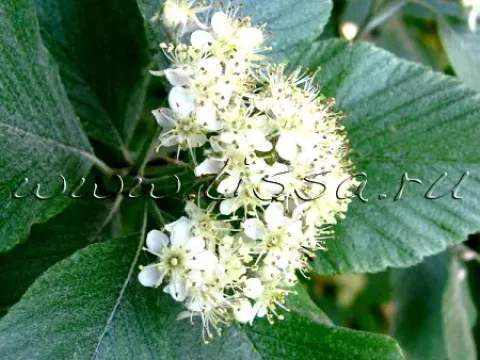
Whitebeam
Aria
The Whitebeam (Aria edulis), belonging to the Rosaceae family, is a medium-sized deciduous tree native to Europe, North Africa, and Western Asia, known for its distinct silvery-white leaf undersides.
What the section contains
 Aria leptophylla
Aria leptophylla
Aria leptophylla
 Aria porrigentiformis
Aria porrigentiformis
Aria porrigentiformis
 Aria vexans
Crimean rowan
Aria taurica
Aria vexans
Aria vexans
Crimean rowan
Aria taurica
 Eminent whitebeam
Aria eminens
Eminent whitebeam
Aria eminens
 Irish whitebeam
Aria hibernica
Irish whitebeam
Aria hibernica
 Lancashire whitebeam
Aria lancastriensis
Lancashire whitebeam
Aria lancastriensis
 Rock whitebeam
Aria rupicola
Rock whitebeam
Aria rupicola
 Umbellate whitebeam
Aria umbellata
Umbellate whitebeam
Aria umbellata
 Wilmott's Whitebeam
Aria wilmottiana
Wilmott's Whitebeam
Aria wilmottiana
Whitebeam
Botanically, it is characterized by its broad, oval leaves with serrated margins and dense, white felt-like pubescence, which helps the plant regulate water loss and reflect intense sunlight.
The species is highly tolerant of various environmental stressors, including pollution, making it an excellent candidate for urban forestry and landscape architecture in city settings.
It prefers well-drained, alkaline, or limestone-based soils and performs best in full sun exposure, although it exhibits a remarkable ability to establish on dry, rocky sites.
Cultural requirements involve minimal intervention; however, young specimens benefit from protective staking and moderate irrigation during their initial growth stages to ensure proper root development.
The fruit of the Whitebeam is a small, mealy pome that turns red to orange-red upon maturity, providing a food source for local bird populations and wildlife.
In economic terms, the wood is highly regarded for its hardness and fine grain, traditionally used for woodturning, musical instrument parts, and high-quality tool handles.
Culinary uses of the fruits include making preserves, jellies, and fermented beverages, although they are rarely consumed fresh in large quantities due to their dry texture.
The tree serves as a vital ornamental asset in parks and gardens, prized for its seasonal color changes and structural elegance that persists throughout the year.
Sustainable harvesting of the fruits and careful management of the tree stands can provide consistent utility both as a timber source and an ecological enhancer.
Like many species in the Rosaceae family, Whitebeam is susceptible to fungal diseases such as apple scab (Venturia inaequalis), which affects foliage and fruit quality.
Powdery mildew represents another common threat, particularly in dense stands with poor airflow, leading to reduced photosynthetic efficiency and diminished aesthetic value.
Pest pressures often involve aphids and lepidopteran larvae, which feed on the developing buds and leaves, necessitating monitoring during the spring flush.
Integrated Pest Management (IPM) strategies, including biological control and judicious use of fungicides, are recommended for maintaining tree health in commercial orchards.
- Regular pruning to improve air circulation.
- Proper waste management by removing infected fallen leaves.
- Monitoring for early signs of insect infestations.