
Rock whitebeam
Aria rupicola
Description
Growing requirements
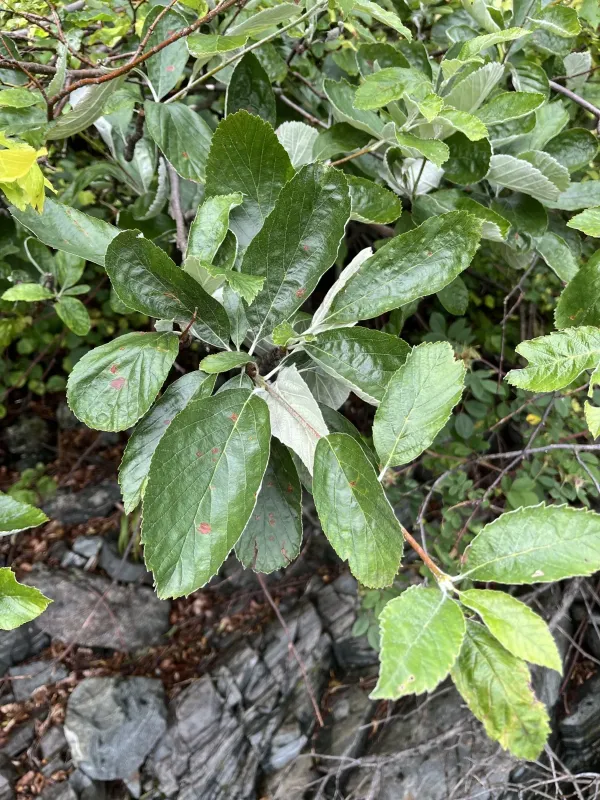
Rock whitebeam (Aria rupicola) is a deciduous shrub or small tree belonging to the Rosaceae family. It is naturally found in limestone habitats and rocky outcrops, which has endowed it with remarkable resilience to poor soils and demanding environmental conditions.
The plant originates from Europe, where it has adapted to temperate climates. Its natural distribution across rocky landscapes highlights its ability to thrive where other species might struggle due to limited nutrient availability or shallow soil profiles.
Cultivation requirements include well-drained, alkaline or neutral soils. The species is highly intolerant of waterlogged conditions, which can lead to root system decay; therefore, choosing or creating an appropriate site is critical for its long-term survival.
Full sun is essential for the healthy growth and aesthetic development of the tree. While it is hardy, shade exposure significantly reduces its vigor and ornamental value, often leading to sparse foliage and limited fruit production.
Maintenance is relatively straightforward and focuses on pruning deadwood and ensuring the tree is not crowded by faster-growing vegetation. It serves as an excellent candidate for xeriscaping and sustainable landscaping due to its moderate drought tolerance.
Main diseases and pests
The primary threats to Aria rupicola include fungal infections such as powdery mildew, which can become prevalent during humid summers. This condition affects both foliage and young stems, requiring timely intervention with fungicides.
Aphids are the most common pests that target new growth during the spring season. These insects suck sap from the leaves, causing them to curl and potentially stunting the development of the shoot tips if left unmanaged.
Rust diseases are also a significant concern, especially in areas where the tree is grown near susceptible conifer species. Managing the surrounding plant diversity can help mitigate the risk of these pathogens spreading to the tree.
Borers and other wood-damaging larvae can compromise the structural integrity of the trunk. Regular inspections and the prompt removal of infected or dying branches are recommended to prevent extensive damage to the tree's vascular system.
Site selection plays a vital role in disease prevention. Avoiding low-lying areas that collect water is the best defense against root-related pathogens and ensures the plant remains vigorous enough to resist opportunistic pest attacks.