
Irish whitebeam
Aria hibernica
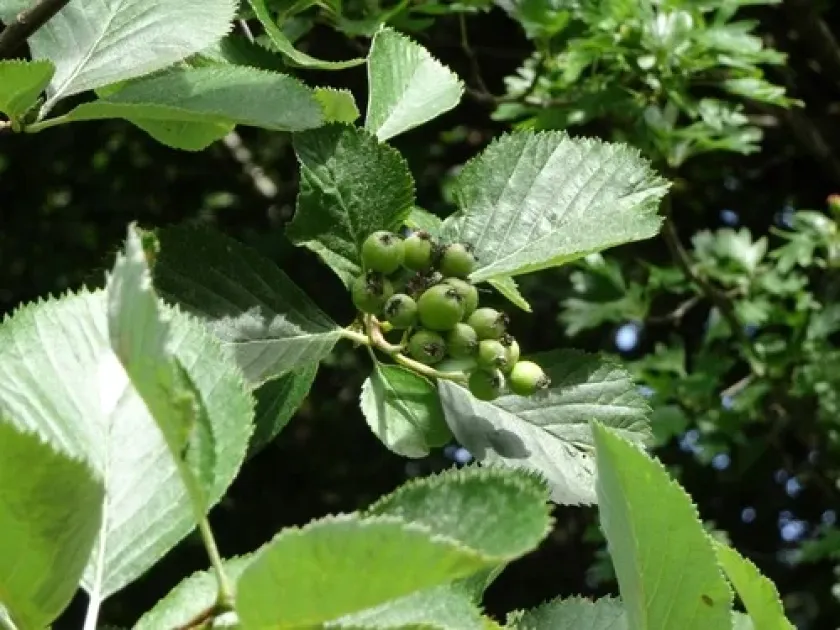
Description
Growing requirements
The Irish whitebeam (Aria hibernica) is a deciduous tree species belonging to the Rosaceae family. It is recognized for its unique botanical profile and restricted natural habitat in Ireland.
The species thrives in well-drained, lime-rich soils. It shows a particular preference for alkaline substrates, which allows it to establish strong root systems in suitable geological conditions.
This tree requires an oceanic climate with consistent humidity and mild temperatures. It does not perform well in areas with extreme temperature fluctuations or severe droughts.
When planning a planting site, it is crucial to select an area that offers protection from high-velocity winds, as the tree's foliage can be susceptible to mechanical damage.
Cultural practices should include minimal disturbance to the root zone and consistent moisture management during the early establishment phase of the sapling.
Main diseases and pests
Like many members of the Rosaceae family, Aria hibernica is susceptible to fire blight (Erwinia amylovora), a bacterial disease that requires immediate pruning and destruction of infected wood.
Fungal diseases, including powdery mildew, represent a constant threat, especially in environments where air circulation is restricted around the tree canopy.
Insect pests such as aphids and leaf-rolling caterpillars can affect the health of the leaves, potentially reducing the tree's photosynthetic efficiency if left untreated.
Integrated pest management, involving both chemical control and physical monitoring, is essential to maintain the structural integrity and aesthetic value of the tree.
Regular sanitation measures, including the removal of leaf litter and dead wood, help to reduce the inoculum levels of pathogens in the surrounding soil and environment.