
Lancashire whitebeam
Aria lancastriensis
Description
Growing requirements
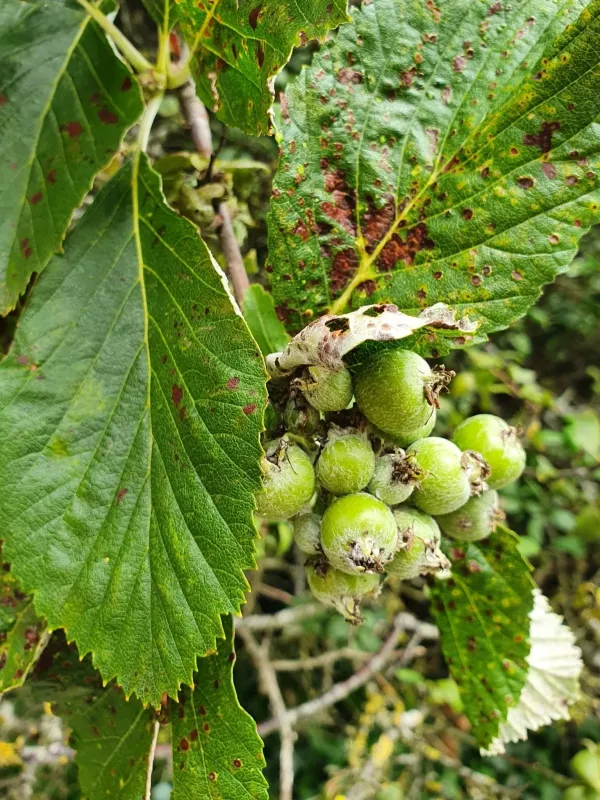
The Lancashire whitebeam (Aria lancastriensis) is a member of the Rosaceae family and is recognized as a rare endemic species native to the limestone landscapes of Lancashire, England. It is a slow-growing deciduous tree, highly valued in specialized arboriculture for its compact and symmetrical habit.
This species thrives in well-drained, calcareous soils, reflecting its natural habitat on limestone pavements and carboniferous limestone outcrops. Providing excellent drainage is essential for successful cultivation, as the species is particularly sensitive to waterlogging, which can cause root rot.
Optimal growth requires full sun or partial shade, which allows the leaves to develop their characteristic greyish-white felted undersides. The tree is quite hardy, though it benefits from shelter in its establishment phase to protect it from extreme winds that may damage young, developing shoots.
Agricultural management is relatively straightforward once the tree is established, requiring minimal pruning to maintain its natural shape. Periodic removal of dead or crossing branches during the dormant season is sufficient to ensure the tree maintains its health and aesthetic appeal for many decades.
Beyond its ornamental use, the Lancashire whitebeam is of significant botanical interest due to its apomictic nature and narrow genetic base. It is frequently conserved in botanical gardens and arboretums to preserve the genetic diversity of rare British flora while offering value to local biodiversity as a food source for birds.
Main diseases and pests
The main pathological threats include fungal pathogens such as rusts and powdery mildew, which can affect the foliage during prolonged humid periods. Ensuring adequate spacing and airflow between individual trees is the most effective way to prevent these issues from becoming severe.
Insect pests, including aphids and gall mites, can occasionally affect the growth of young trees during the spring flush. Monitoring for signs of infestation and using biological control methods or environmentally friendly soaps can effectively manage these pests without harming the local ecosystem.