
Ardisia tuberculata
Ardisia tuberculata
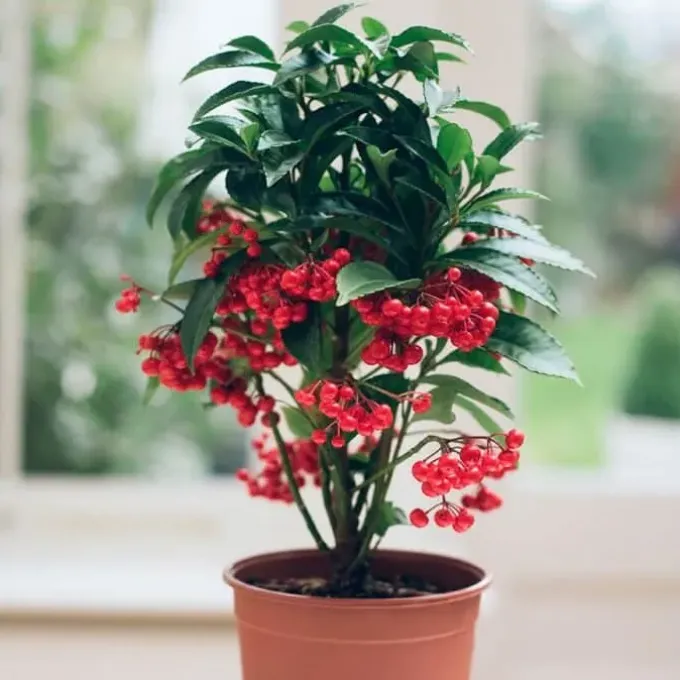
Description
Growing requirements
Ardisia tuberculata belongs to the Primulaceae family. This evergreen shrub is native to the tropical and subtropical regions of Southeast Asia, thriving in humid forest understories where it finds protection from intense sunlight.
The plant requires bright, filtered light for optimal development. Intense midday sun can scorch the foliage, leading to necrosis. Therefore, in an agricultural or greenhouse setting, the use of shading cloths is recommended.
Soil requirements involve a well-draining, slightly acidic medium. A mixture of peat, perlite, and pine bark is often used to ensure proper aeration and moisture retention without risking root rot during the dormant season.
Environmental climate conditions should be stable, with temperatures ranging from 18 to 25 degrees Celsius. Ardisia tuberculata is sensitive to cold drafts and sudden temperature fluctuations, which can trigger leaf drop.
Agronomic management includes consistent irrigation using soft water. The substrate should be kept evenly moist during the growing season, while fertilization should be balanced with a focus on micronutrients to maintain deep green foliage.
Main diseases and pests
Common pests affecting Ardisia tuberculata include scale insects and mealybugs. These pests hide in the leaf axils and on the undersides of leaves, draining nutrients and weakening the overall plant vigor.
Fungal pathogens such as Pythium and Phytophthora pose a significant threat, especially when soil moisture is poorly managed. These fungi lead to rapid root decay and wilting of the shrub.
Control strategies involve Integrated Pest Management (IPM), starting with regular monitoring and physical removal of pests. Chemical treatments are reserved for severe infestations and should be applied systematically.
Preventive measures focus on hygiene in the growing area. Keeping the environment clean, removing debris, and ensuring proper airflow between plants are key factors in limiting the spread of infectious diseases.
Root system health is paramount; therefore, avoiding waterlogging is the primary method of preventing soil-borne pathogens. If infection is identified, rapid isolation and application of fungicides are necessary.