
Ardisia elliptica
Ardisia elliptica
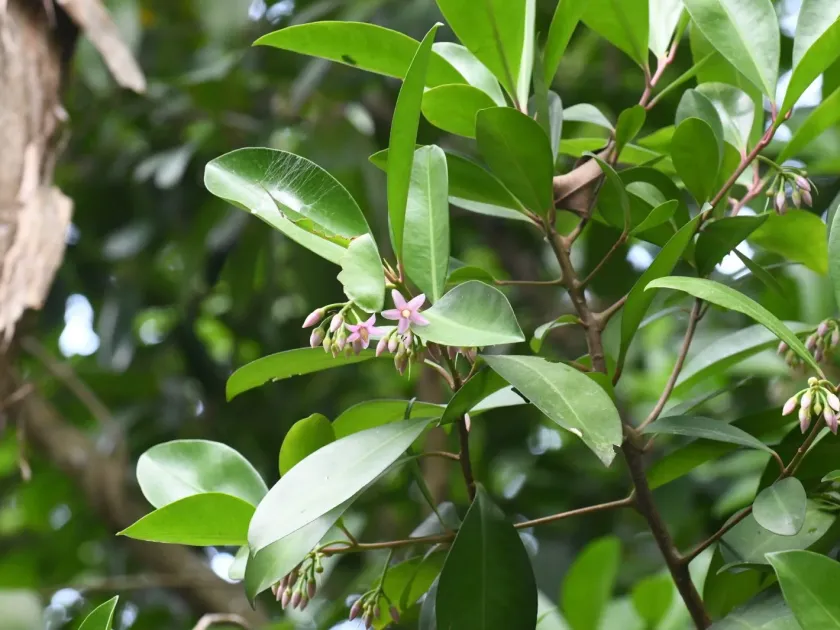
Description
Growing requirements
Ardisia elliptica is a perennial evergreen shrub belonging to the Primulaceae family. Native to tropical regions of Southeast Asia, it is well-regarded for its glossy foliage and ornamental berry-like fruits that mature from red to dark purple.
Regarding climatic needs, this species thrives in tropical environments with high humidity levels. It performs best in partial shade, as direct sun exposure often leads to leaf scorching, especially in arid climates or open fields.
The soil requirements focus on well-draining, nutrient-rich, slightly acidic media. Heavy or compacted soils are detrimental to the plant, as they encourage root suffocation and inhibit necessary gas exchange in the rhizosphere.
Agronomic management involves maintaining consistent moisture levels while avoiding waterlogging. During the active growth season, balanced liquid fertilization is recommended to support foliage development and successful fruit set.
Propagation is typically conducted through seeds or softwood cuttings. When growing in containers, it is essential to ensure large enough pots to accommodate the extensive root system that the plant develops over time.
Main diseases and pests
Scale insects are among the most persistent pests for Ardisia elliptica. These insects settle on stems and leaf undersides, extracting plant sap and leading to reduced vigor and the growth of sooty mold on the excreted honeydew.
Mealybugs represent another significant threat, often colonizing protected areas such as leaf axils. Infestations lead to stunted growth and require systemic treatments or manual removal using horticultural oils.
Root rot is the primary physiological and pathological threat triggered by inadequate soil aeration and overwatering. It is a silent killer that requires preventive measures, specifically focusing on drainage efficiency.
Leaf spot diseases, caused by various fungi, can occur when foliage remains wet for extended periods in low-ventilation environments. Implementing irrigation strategies that keep the leaves dry is a crucial preventive step.
Monitoring for signs of stress is vital, as Ardisia elliptica reacts poorly to chemical shocks. Integrated pest management (IPM) practices, emphasizing biological controls, are highly recommended for sustainable cultivation.