
Ardisia compressa
Ardisia compressa
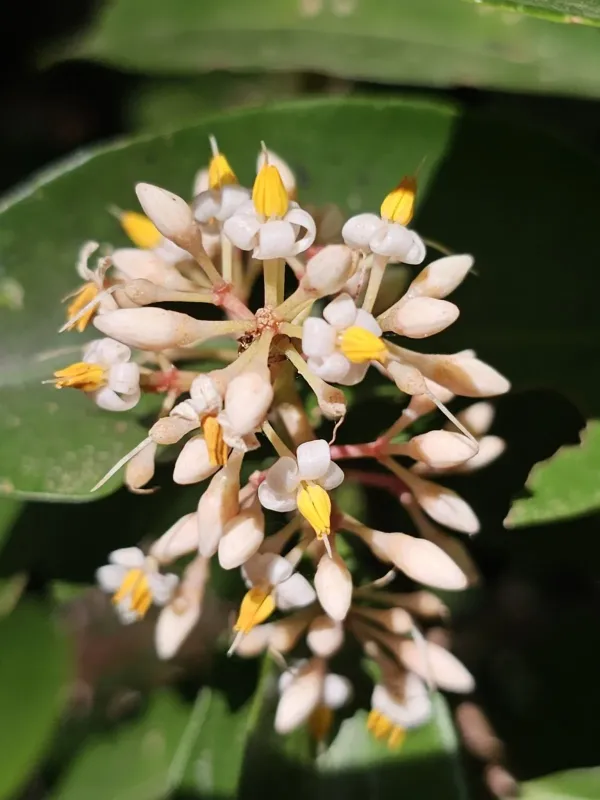
Description
Sowing dates
Ardisia compressa is typically propagated through seeds which should be harvested when fully ripe for maximum viability. Seeds require a well-draining, peat-based substrate to ensure successful germination without risk of rot.
The ideal sowing depth is approximately 1 centimeter, maintaining high humidity levels throughout the process. Using a heating mat to keep the temperature steady at 24 degrees Celsius significantly improves the success rate of the propagation.
Germination usually takes several weeks, and seedlings must be protected from direct sunlight during their early development stages. Once the seedlings develop several true leaves, they are ready to be transplanted into larger, individual containers.
Cuttings can also be used for reproduction by taking semi-hardwood stems in early summer. These should be treated with rooting hormone and kept in a controlled, humid environment to stimulate the development of an adventitious root system.
Professional nurseries often focus on maintaining a specific light-to-water ratio to ensure the growth of stocky, healthy plants. Proper sanitation of tools is essential during all propagation phases to prevent the transmission of pathogens.
Growing requirements
Ardisia compressa is a member of the Primulaceae family, native to the tropical regions of Central and South America. It thrives in environments that mimic its natural forest habitat, featuring bright but indirect light conditions.
Soil composition must be rich in organic matter and possess excellent drainage capabilities to avoid root asphyxiation. The plants prefer a slightly acidic to neutral pH range, which can be managed with periodic testing and soil amendments.
Climate control is crucial, as Ardisia compressa does not tolerate frost or cold drafts. The optimal growing temperature is between 20 and 25 degrees Celsius, while during the winter, a cooling period of around 16 degrees helps promote future flowering.
Moisture management involves consistent hydration and regular misting to maintain high relative humidity. If the indoor air becomes too dry, the leaf tips may turn brown, signaling the need for supplemental humidity solutions.
Nutritional needs are met through regular fertilization during the active growth period, typically occurring from spring through late summer. Using a balanced liquid fertilizer diluted to half strength is generally safer than applying high concentrations of minerals.
Main diseases and pests
Scale insects are among the most persistent pests affecting Ardisia compressa, often hiding along the veins of the leaves or on the stems. Infestations lead to the secretion of honeydew, which promotes the growth of unsightly sooty mold on the surface of the plant.
Spider mites can rapidly damage the foliage in low-humidity environments, manifesting as small white spots or fine webbing between leaves. Regular inspection and increasing the surrounding humidity are the best preventative strategies against these microscopic pests.
Fungal leaf spot diseases may occur when plants are kept in stagnant, humid air with poor circulation. Keeping the foliage dry and ensuring adequate space between plants helps mitigate the spread of spores and bacterial infections.
Root rot is the most serious threat, usually caused by overwatering or poor soil drainage. If detected early, the plant can be salvaged by trimming away infected roots and repotting in a fresh, sterile potting mix with better aeration.
- Scale insects (mechanical removal and systemic insecticides).
- Spider mites (acaricid sprays and humidity management).
- Mealybugs (cotton swabs dipped in rubbing alcohol).
- Leaf spot (fungicidal treatment and improved air flow).
- Root rot (repotting and irrigation control).