
Ardisia complanata
Ardisia complanata
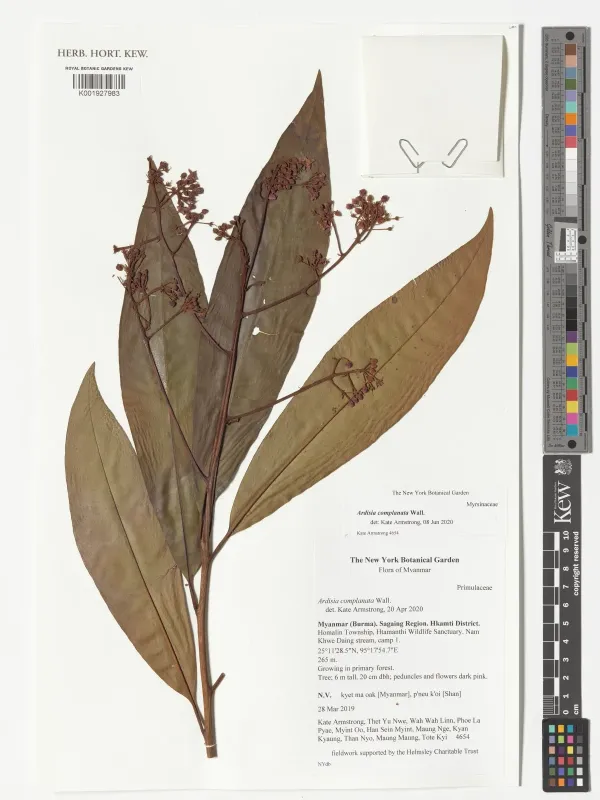
Description
Growing requirements
Ardisia complanata is a prominent member of the Primulaceae family, naturally occurring in the tropical rainforests of Southeast Asia. This evergreen shrub is highly valued for its dense foliage and architectural habit, which makes it an interesting subject for greenhouse cultivation.
The plant requires a strictly tropical environment to thrive. Maintaining temperatures consistently between 20°C and 25°C is essential for healthy development. Exposure to temperatures below 15°C can cause significant physiological stress, often resulting in leaf drop or stunted growth.
High humidity levels are non-negotiable for this species. To mimic its natural habitat, growers should maintain ambient humidity above 65%. Frequent misting or the use of ultrasonic humidifiers is recommended, especially during warmer months or in indoor settings with heating systems.
The ideal growing medium for Ardisia complanata is a well-aerated, peat-based mix. It should have a slightly acidic pH and excellent drainage characteristics. Compaction of the soil can lead to anaerobic conditions, which quickly rot the delicate root system of the plant.
Indirect light is the preferred exposure. While the plant can tolerate lower light levels compared to sun-loving shrubs, intense direct sunlight should be avoided at all costs to prevent leaf scorch. A dappled light environment, similar to that provided by a canopy, is ideal.
Main diseases and pests
Scale insects represent a major threat to this species. These pests attach themselves to the undersides of leaves and stems, sucking the sap and weakening the plant. Mechanical removal combined with systematic chemical treatments is the standard approach for control.
Mealybugs are another common challenge, particularly in greenhouse environments. Their presence is easily identified by the white, cotton-like masses they produce. Regular inspection of the stem nodes and leaf bases is necessary to detect and treat infestations early.
Root rot, primarily caused by species of Phytophthora or Pythium, is the most lethal disease for Ardisia. This is almost exclusively linked to overwatering or poor drainage, highlighting the necessity of careful irrigation scheduling.
Leaf spot diseases, often fungal in origin, can disfigure the foliage and reduce the plant's aesthetic value. These thrive in stagnant air conditions, emphasizing the importance of horizontal air movement and adequate spacing between individual plants.
Integrated pest management (IPM) strategies, including the use of neem oil or biological control agents like predatory mites, are highly recommended. Maintaining proper sanitation by removing fallen leaves and debris reduces the substrate for potential pathogens.