
Ardisia polycephala
Ardisia polycephala
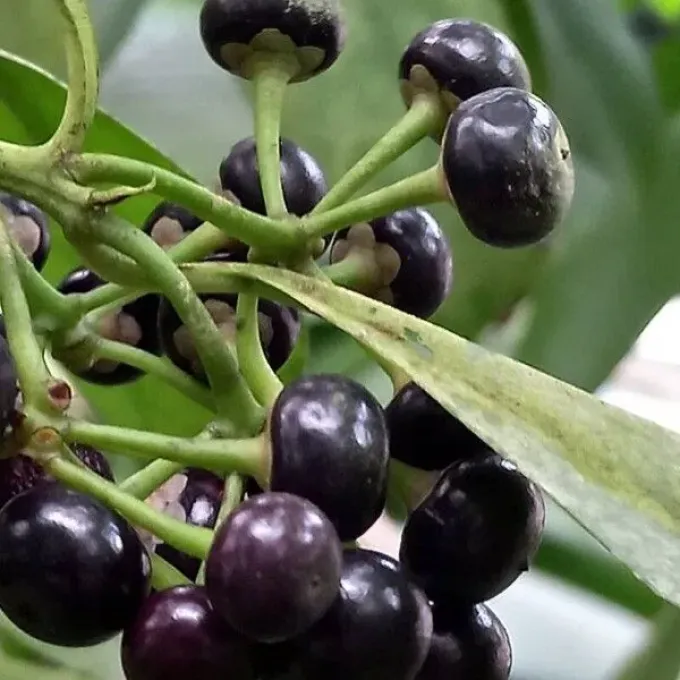
Description
Growing requirements
Ardisia polycephala is an evergreen shrub belonging to the Primulaceae family. Native to the tropical regions of Southeast Asia, this species has adapted to the understory conditions of rainforests, characterized by moderate light and high humidity.
The plant requires a stable temperature range, ideally between 18°C and 25°C. Exposure to extreme cold or dry heat can lead to rapid senescence of the foliage and significantly impede the growth rate of the shrub.
Soil requirements for this culture are specific: it thrives in well-draining, slightly acidic, and nutrient-rich organic substrates. High-quality peat-based mixes with added perlite or sand are recommended to prevent compaction and root suffocation.
Regarding light, Ardisia polycephala prefers bright, indirect sunlight. Intense direct rays can bleach the leaves and cause structural damage, whereas deep shade prevents the plant from producing its characteristic fruit clusters.
Water management is critical during the active growing season. The substrate should be kept consistently moist but not saturated, as this species is particularly prone to root rot when subjected to prolonged stagnant moisture conditions.
Main diseases and pests
Common pests include scale insects, which often congregate on the undersides of leaves and along the stems. Their presence causes yellowing and stunted growth due to the extraction of sap from the plant's vascular system.
Mealybugs are another frequent threat, manifesting as white, cotton-like masses in leaf axils. They weaken the plant and facilitate the development of sooty mold, which impairs photosynthesis across the leaf surface.
Spider mites are prevalent in environments with low humidity. These microscopic arachnids weave delicate webs and cause stippling on the leaves, which can lead to premature leaf drop if not addressed immediately.
Fungal pathogens such as leaf spot are primarily caused by poor air circulation and excessive moisture on the foliage. Maintaining adequate spacing between plants is essential to prevent the spread of these infections in a commercial setting.
Preventive care involves routine inspections for early signs of infestation and the application of horticultural oils or systemic insecticides when necessary. Ensuring a clean growing environment is vital for maintaining plant health and longevity.