
Ardisia parasitica
Ardisia parasitica
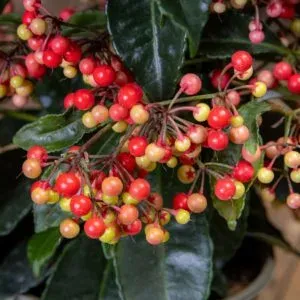
Description
Growing requirements
Ardisia parasitica is a species belonging to the Primulaceae family. Native to tropical regions, it exhibits unique growth habits, often functioning as an epiphyte that thrives in warm and humid environments.
Cultivation requirements necessitate an environment with high levels of ambient humidity and moderate to bright indirect sunlight. Harsh, direct sunlight should be avoided to prevent foliar damage and drying of the leaf margins.
The ideal temperature for this crop ranges from 18 to 26 degrees Celsius. Stable temperatures are crucial, as significant fluctuations can cause physiological stress and leaf drop in the plants.
Soil composition must prioritize drainage and aeration. A substrate mixture consisting of peat moss, pine bark, and perlite provides the necessary structure to support healthy root growth without risking waterlogging.
Regular fertilization is required during the active growing season. A balanced, water-soluble fertilizer applied at half-strength is typically sufficient to maintain nutrient levels for optimal development and foliage health.
Main diseases and pests
Scale insects are among the most common pests affecting Ardisia parasitica. They attach themselves to stems and the underside of leaves, feeding on plant sap and weakening the overall vigor of the host plant.
Spider mites represent a significant threat in dry conditions. These microscopic pests extract moisture from leaf cells, leaving a mottled or chlorotic appearance on the foliage and reducing the photosynthetic capacity.
Root rot, primarily caused by Phytophthora or Pythium species, remains the most frequent disease associated with improper irrigation practices. Overwatering creates anaerobic conditions that favor these pathogens.
Integrated Pest Management (IPM) strategies, including biological control using predatory mites and targeted horticultural oils, are effective for maintaining plant health in controlled environments.
Sanitation practices, such as removing fallen debris and maintaining adequate airflow, are essential to prevent the spread of fungal spores and ensure the long-term productivity of the plantation.