
Ardisia obovata
Ardisia obovata
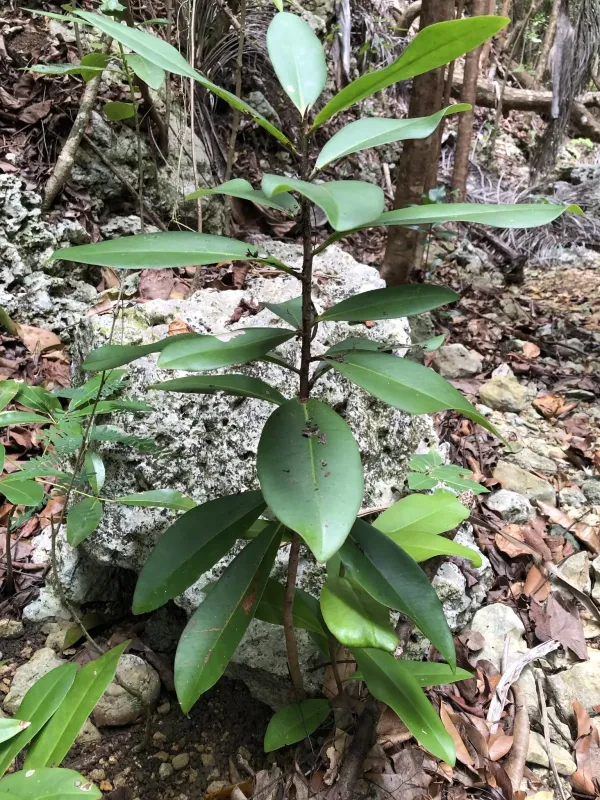
Description
Growing requirements
Ardisia obovata belongs to the Primulaceae family and is a distinctive evergreen woody plant native to the tropical regions of the Caribbean and the Antilles. It is highly valued for its ornamental characteristics and specific botanical structure.
The plant requires a stable tropical climate with temperatures consistently maintained between 18 and 24 degrees Celsius. It is notably sensitive to thermal stress, which can lead to significant physiological decline.
Optimal growth conditions involve well-draining, nutrient-rich, slightly acidic soil. The substrate should be maintained at a consistent moisture level, preventing both desiccation and waterlogging, which are detrimental to the root system.
Lighting requirements include bright, indirect sunlight. While the plant can tolerate lower light levels, sufficient luminosity is critical for healthy foliage development and subsequent flowering.
Regular maintenance involves light pruning to preserve shape and encourage denser growth. Fertilization programs should be implemented during the active growing phase using balanced mineral formulations.
Main diseases and pests
Scale insects are among the most persistent pests affecting Ardisia obovata. They attach themselves to stems and foliage, extracting sap and weakening the plant's overall structural integrity.
Mealybugs pose a significant threat, often colonizing protected areas such as leaf axils. Infestations typically require systemic insecticidal treatments to ensure complete eradication of the population.
Spider mites are frequently encountered when environmental humidity drops below recommended levels. They cause stippling on leaves and can eventually lead to leaf drop if left untreated.
Root rot is a common physiological threat caused by poor drainage or overwatering. Maintaining the correct moisture balance is the primary preventative measure against soil-borne pathogens.
Fungal leaf spots can occur under conditions of poor air circulation and high ambient moisture. Implementing proper spacing and ventilation is essential to mitigate these biological risks effectively.