
Ardisia guianensis
Ardisia guianensis
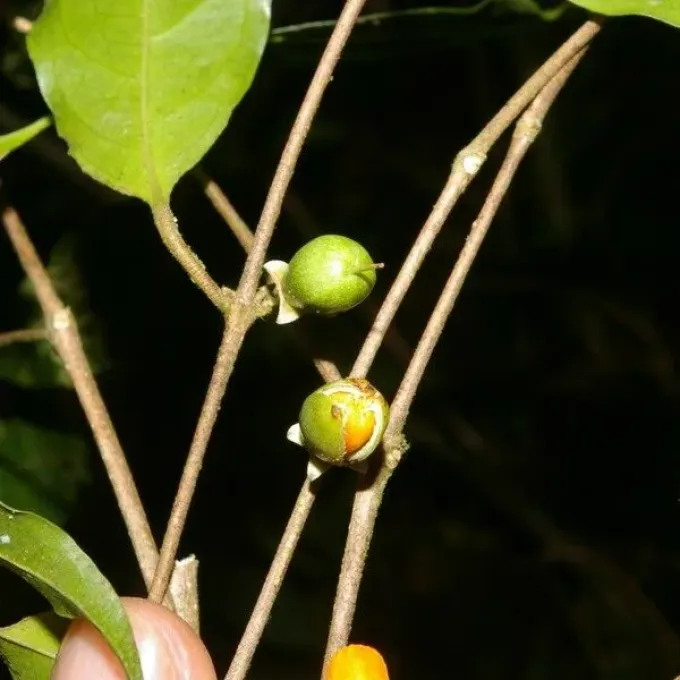
Description
Growing requirements
Ardisia guianensis is a distinct species belonging to the Primulaceae family. It is a robust evergreen shrub native to the tropical forests of South America, specifically adapted to the humid and shaded conditions of the Guiana Shield region.
The plant thrives in tropical climates with temperatures consistently ranging from 20°C to 28°C. It requires protection from cold drafts and frost, making it suitable for greenhouses or controlled environments in non-tropical agricultural zones.
Soil requirements for Ardisia guianensis include a rich, well-draining medium. A mixture based on peat, perlite, and decomposed organic matter is ideal for ensuring sufficient moisture retention while preventing root saturation, which the species is sensitive to.
Agrotechnical management involves maintaining high relative humidity, ideally between 70% and 80%. Supplemental irrigation and misting systems are recommended in greenhouse settings to replicate its natural forest habitat and promote healthy leaf development.
Light management is crucial; while the plant can tolerate lower light intensity, moderate diffused sunlight is necessary for optimal vegetative growth. Exposure to intense, direct noon sun should be avoided to prevent foliar scorching and dehydration.
Main diseases and pests
Scale insects represent a primary pest threat to Ardisia cultivation. These insects adhere to stems and leaves, extracting plant sap and weakening the overall structure, often leading to secondary infections if left unmanaged.
Mealybugs are another common concern, particularly in greenhouse environments with limited airflow. They tend to cluster in leaf axils, hindering new growth and causing the plant to suffer from stunted development and loss of foliage vitality.
Fungal diseases, including leaf spot pathogens, frequently arise when ventilation is insufficient. High humidity levels without proper air circulation create a conducive environment for spore germination on the leaf surface.
Root rot is a critical threat that stems from poor irrigation practices. Waterlogged substrate excludes oxygen from the root zone, leading to the decay of fine root hairs and eventual plant death if the issue is not addressed immediately.
Integrated Pest Management (IPM) strategies, including the use of neem oil or systemic insecticides, are recommended to control infestations. Regular monitoring and pruning of affected parts help maintain plant health and prevent the spread of diseases.