
Dwarf mistletoe
Arceuthobium pusillum
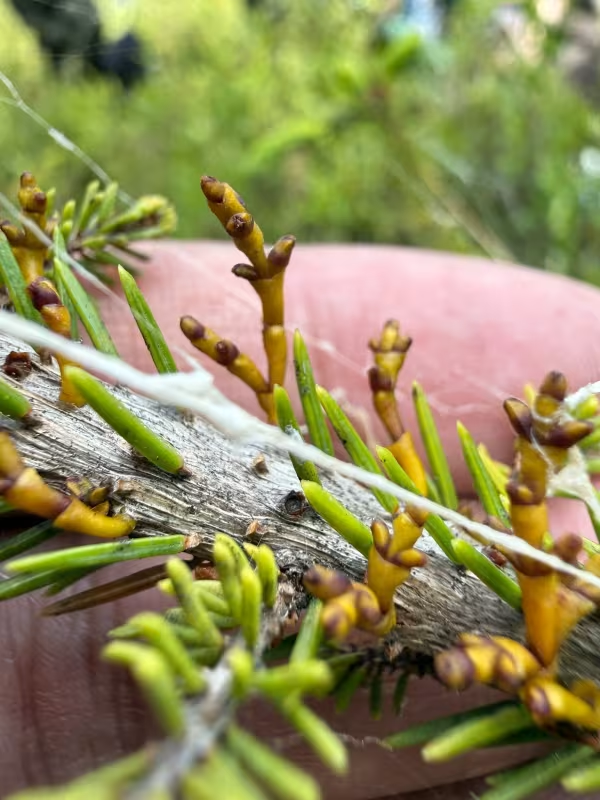
Description
Growing requirements
Dwarf mistletoe (Arceuthobium pusillum) is a parasitic plant belonging to the Santalaceae family, known primarily for its destructive impact on various spruce species in North America.
It is not a crop, but rather an obligate parasite that relies entirely on its host tree to extract water, nutrients, and carbohydrates through a specialized haustorial system.
The plant originates from the boreal forests of Canada and the northern United States, where it thrives in cool, humid environments consistent with spruce distribution.
Botanically, it is characterized by reduced, scale-like leaves and a small, segmented body that spends most of its life cycle embedded within the host's bark.
There are no cultural practices or sowing requirements for this plant, as it is managed as a noxious pest rather than cultivated for agricultural or commercial purposes.
Main diseases and pests
The primary damage caused by Arceuthobium pusillum is the formation of dense, abnormal branch growth known as witch's brooms, which drain energy from the host tree.
As the parasite matures, it significantly reduces the host tree's growth rate, weakens its structural integrity, and often leads to the tree's eventual mortality.
The plant is highly invasive within its habitat due to an explosive seed-dispersal mechanism that can propel seeds up to several meters, infecting nearby trees.
Forest managers often implement control strategies such as thinning, pruning infected branches, or clear-cutting heavily infested areas to save healthy stands.
Secondary threats include the susceptibility of infested trees to other fungal pathogens and wood-boring insects, further compounding the degradation of the forest ecosystem.