
Fir Dwarf Mistletoe
Arceuthobium abietinum
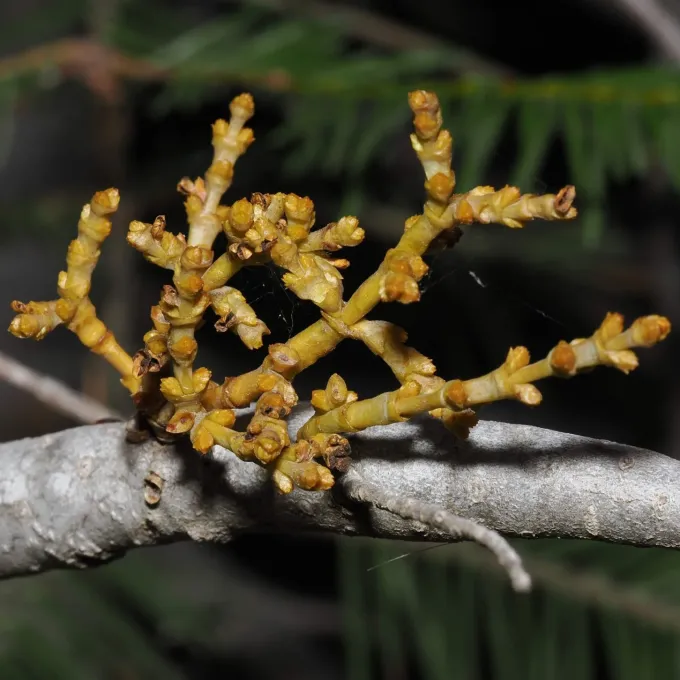
Description
Main diseases and pests
Arceuthobium abietinum, commonly known as fir dwarf mistletoe, is a parasitic flowering plant belonging to the Santalaceae family. It is strictly a forest pathogen rather than an agricultural crop, significantly affecting the health and productivity of fir species.
The plant lacks functional leaves and chlorophyll, relying entirely on its host for water and nutrients through an internal system of haustoria. These structures invade the xylem and phloem of the host tree, causing physiological stress and structural damage.
Geographically, it is predominantly found in North American coniferous forests. It thrives in various climatic conditions where its specific hosts are present, though its density often correlates with stand age and local microclimate humidity.
A distinctive feature of this species is its explosive seed dispersal mechanism. Ripe fruits can eject seeds at high velocities, allowing them to travel distances capable of infecting surrounding trees, which facilitates the rapid expansion of infestation zones.
Management strategies involve silvicultural practices, primarily the thinning or clear-cutting of severely infected stands to prevent further spread. Monitoring and early detection are essential for maintaining the vigor of commercial timber forests against this persistent parasite.