
Arceuthobium californicum
Arceuthobium californicum
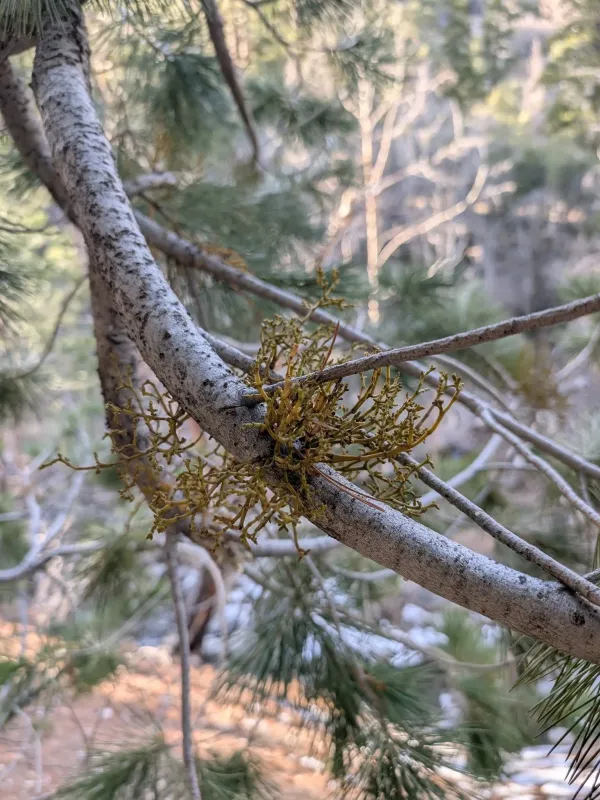
Description
Growing requirements
Arceuthobium californicum is a species of parasitic plant belonging to the Santalaceae family. It is strictly classified as a forest pathogen rather than an agricultural crop, as it causes significant ecological and economic impact on pine forests.
The species is native to the western regions of North America, specifically occurring in the mountainous ecosystems of California. Its distribution is entirely dependent on the presence of susceptible coniferous host species, such as the sugar pine.
Botanically, it is recognized as a dwarf mistletoe. It lacks fully functional leaves and chlorophyll, relying on a sophisticated internal root-like system called endophytes that penetrate the host tree's cambium to siphon off nutrients and water.
The environmental requirements are niche-specific. The plant thrives in temperate climates where high moisture levels support the germination of seeds on the host's bark during the early spring season, allowing it to penetrate the host successfully.
Techniques for managing the species are centered on silvicultural practices rather than farming. Foresters focus on identifying infected stands and implementing removal strategies to prevent the pathogen from spreading to healthy, productive trees.
Main diseases and pests
The primary threat is the physiological decline of the host tree. By diverting essential resources, Arceuthobium californicum causes reduced growth rates, branch death, and eventually, the complete mortality of the infested coniferous tree.
Structural damage is a significant concern for the timber industry. The parasitic growth causes malformations and swellings, commonly referred to as witches' brooms, which render the wood useless for high-quality lumber production.
Spread is facilitated by an explosive seed dispersal mechanism. Mature fruits develop internal hydraulic pressure, enabling them to launch seeds over significant distances, ensuring the parasitic colonization of neighboring trees.
Infected trees become highly susceptible to secondary pests. Insects like bark beetles frequently target trees weakened by the mistletoe, leading to large-scale forest mortality incidents and severe economic losses for forestry operations.
Control is challenging because the parasite is embedded within the host's vascular tissue. Management typically involves the sanitation of infected areas, thinning out affected trees, and maintaining species diversity to limit the spread of the pathogen.